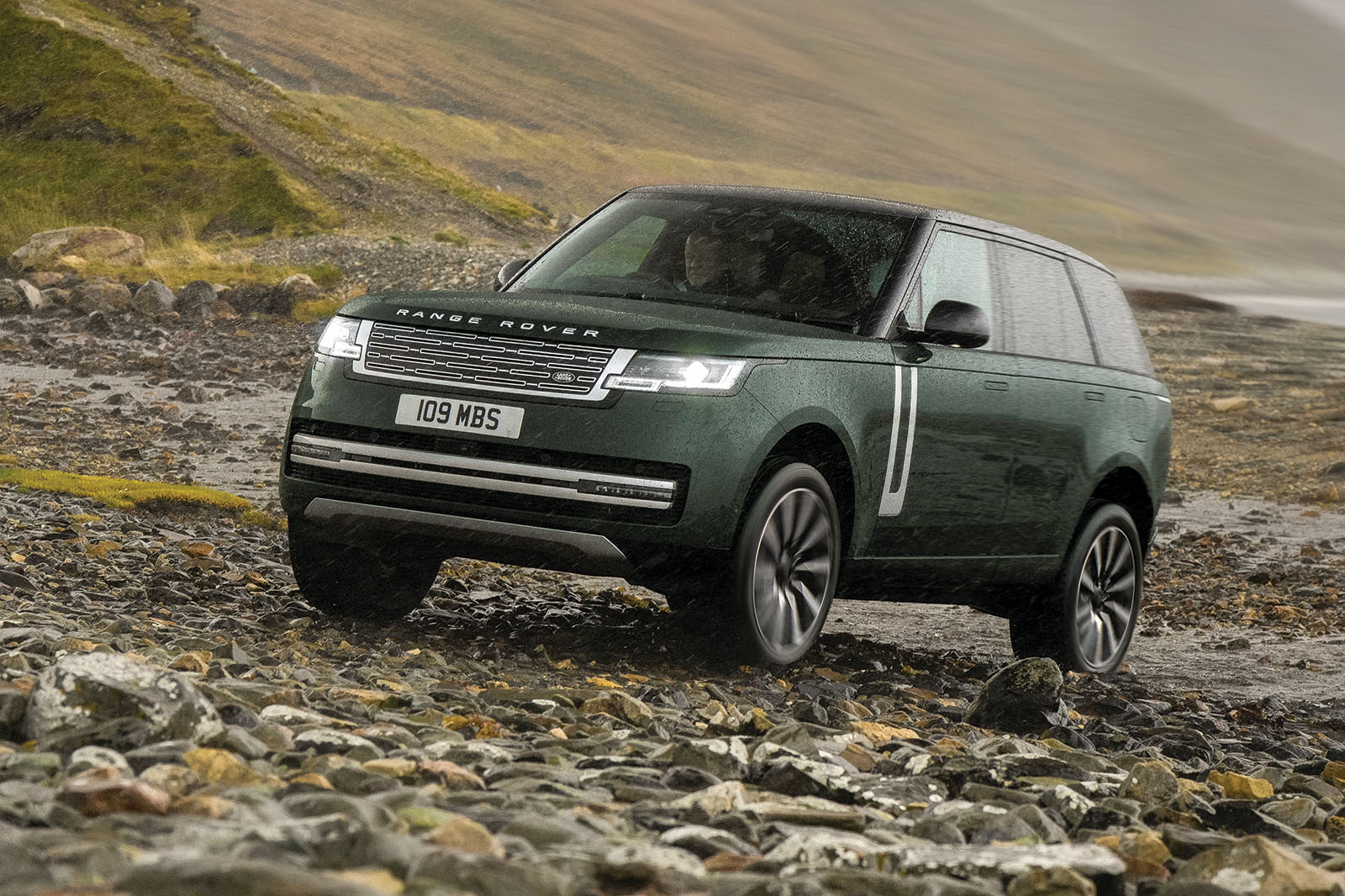
For all the class of the ICE Range Rovers, there are some obvious improvements that could be made. For one, the ride of this generation hasn’t been as peerless as possible.
In the past, we’ve included Range Rovers in best-riding car tests and it’s done well, but this one wouldn’t be on the shortlist.
Like the low-speed issues, it’s all relative: the car is excellent and above the class average here, but that’s not to say it couldn’t be improved.
Despite being heavier, the Range Rover Electric feels more nimble on the road than the ICE versions. It steers a bit better, handles a bit better and rides a lot better.
The EV adopts dual-chamber air suspension familiar from the Range Rover Sport, and this makes the ride more comfortable and less firm at all speeds while also improving body control. Body roll, pitch and dive are much better contained.
The improved steering comes from stiffer bushings and making greater use of the rear steering at more speeds. Again, it’s those levels and marginal gains again, but it’s all noticeable, making the EV a nicer car to drive.
Adopt Dynamic mode and the Range Rover Electric does a passing impression of the Range Rover Sport without any real comfort trade-off. It seems untroubled by undulating roads at faster speeds and is a nice car to be driven in briskly as well as to drive – a rare combination.
The weight is only up around 75kg on a plug-in hybrid version, the enormous battery pack adding back the weight of the petrol engine coming out, but it’s a bit of a beast, at close to three tonnes.
While there is better bite at the start of the brake pedal travel, you still need a slightly firmer shove to bring the EV to a quicker stop, such is the heft.