PLOT: A robot girl designed to prevent loneliness tries to save a heartbroken family of humans.
REVIEW: After Boy, What We Do In The Shadows, and Hunt for the Wilderpeople, Taika Waititi had really cemented himself as someone who could do soulful comedy. Then he joined the MCU with Thor: Ragnarok and his career was put on a different path. While that film was great, Waititi has failed to connect with audiences in a significant way ever since. Now, he’s staying entirely behind the camera to bring us Klara and the Sun, based on the acclaimed book from author Kazuo Ishiguro. And while it’s not the abomination that some people are making it out to be, it’s hard not to be disappointed by this adaptation.
Klara and the Sun follows an outdated robot known as an Artificial Friend, who gets purchased by a lonely girl who, you guessed it, needs a friend. Having spent all of her life in a store, Klara gets to finally experience life through her new friend, Josie. But while living with this new family, Klara realizes that her purpose is for more than just friendship, and she has to save Josie’s life. It’s a simple enough story, and I could see how it’d be a very charming book. Unfortunately, the film feels very tonally inconsistent and has a hard time getting its footing. It often feels like a poor imitation of better stories that used the concept of a robot friend to a more fulfilling outcome.
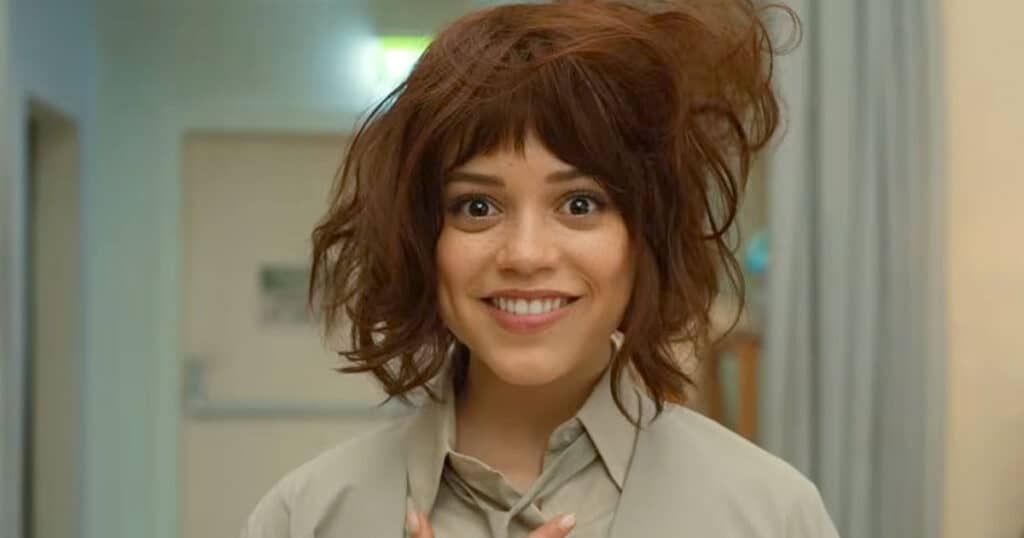
Jenna Ortega is so good as Klara that she manages to reach through all the noise and bring some emotion to several key moments. Klara isn’t portrayed as your typical robot and is given a very whimsical side, which doesn’t go into farce. She’s simply ignorant of the world and learning day by day, but still has very human qualities. I enjoyed the limitations put on her, as robots in films can often be far too Terminator-like in their capabilities. I also really liked both Mia Tharia and Aran Murphy, who were both very charming in their roles. I just found the characters themselves to fall into some common trappings as the story progressed.
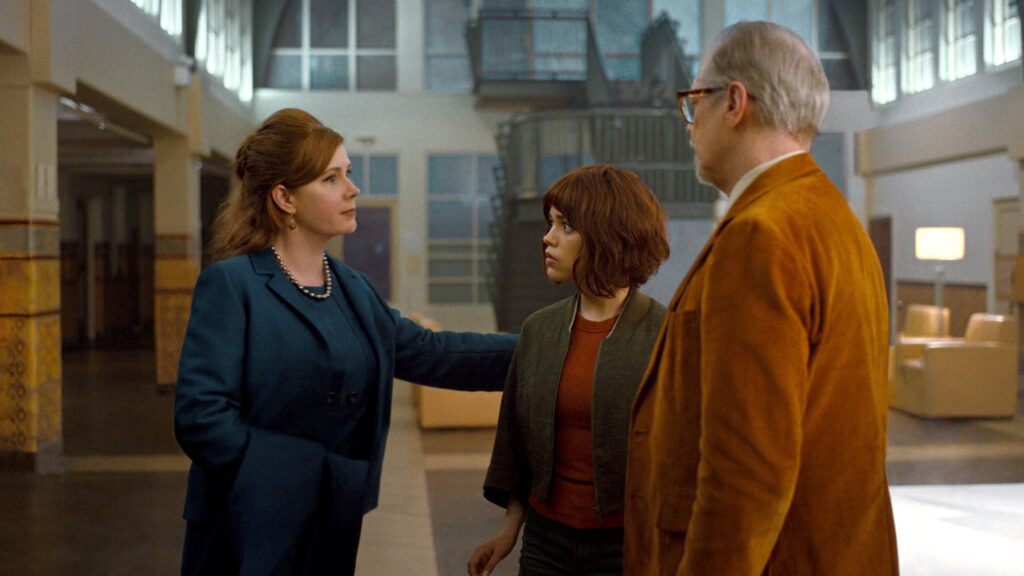
I usually love Amy Adams, but there’s something about her performance that doesn’t work, with a certain theatricality that was off-putting, given the character’s constant state of grief. Her character is so intensely unlikable when she didn’t need to be. Rachel House is always a highlight of any Taika Waititi film (or hell, most stuff shot in New Zealand), and here she is no different. She is able to make the most mundane line hysterical, and she often steals any scene she’s part of. She just does so well in the role of a fiercely loyal protector. Steve Buscemi shows up, but it’s nothing more than a brief scene, and he’s not given much to work with outside of exposition. And I suppose I should mention Natasha Lyonne, who plays the exact character you would expect her to.
There are definitely some futuristic, sci-fi plot threads going on, like the “lifted” kids. These are kids who have their DNA altered to be more intelligent and have more advantages than the average person. But the concept is so surface-level, and never dives into what this could imply about classes, with intelligence being bought. This could apply to nearly every element of this story, as it wants to be scientific but also a fairy tale, while never really committing to either.
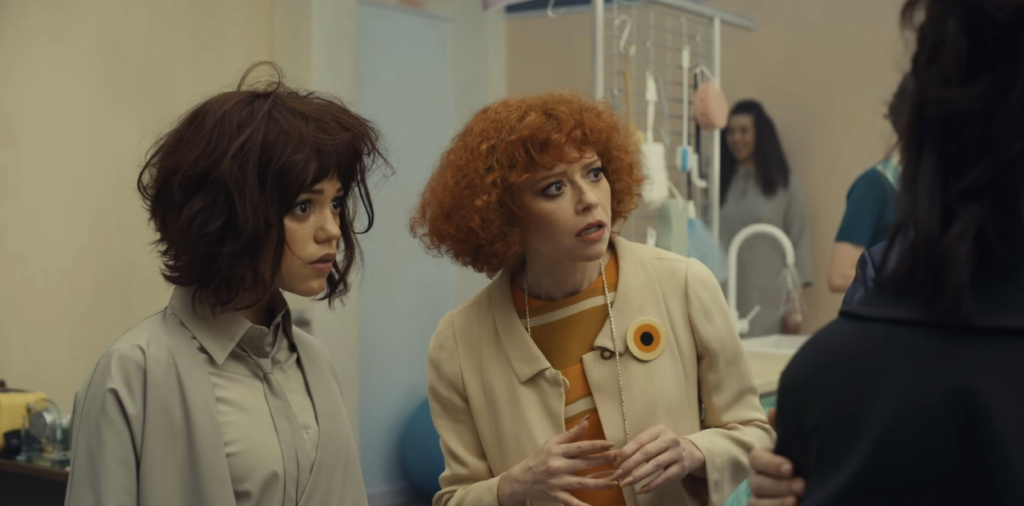
The more I thought about the world, the less sense it made, and the more it felt like “being strange” was the main purpose. At one point, there’s a whole group that’s dressed up like they’re in a Tim Burton movie mixed with Zoolander. The wardrobe is all over the place and I feel like it signals an inconsistency in overall vision. Depending on the scene, it can feel like a completely different film. That could work for something else, but this film needed even the slightest bit of uniformity, as it’s a future world that we need to understand. Instead, as soon as we’re used to how this world is being presented, the art style shifts.
And hey, I don’t need my science fiction movies to make sense. Lasers don’t make sound in space, yet I accept that because the world makes rules that feel believable for what we’re seeing. Klara and the Sun never really gives us any parameters for the world. It’s this weird mishmash of spirituality and science, but it never fully invests in either. There’s some interesting window dressing, but it all ends up being very surface-level when you try to look deeper.
Oddly enough, the film really finds its voice once it embraces the abstract. It ends on such a great note that it made me wish the prior two hours had been worthy of such a wrap-up. Instead, Ortega’s great lead performance is wasted in this lifeless sci-fi world. The few jokes that do work are few and far between, and I feel like this one is less guilty of all the jokes during dramatic moments that Waititi had long been criticized for. I just wish it had resulted in a film that was more tonally consistent and clear in its vision.
The post Klara and the Sun Review: Jenna Ortega Can’t Save This Disjointed Sci-Fi Mess appeared first on JoBlo.