Over 50 experts—clinicians, researchers, policymakers, first responders and representatives from agencies that employ and advocate for them—have reached consensus on the first recommendations for the recognition, diagnosis and management of traumatic brain injury in first responders.
Publishing today (Oct. 16, 2026) in The Journal of Head Trauma Rehabilitation, the 52 authors agreed to 28 recommendations designed to help first responders, health care professionals and agencies work toward five primary goals: timely recognition of traumatic brain injury (TBI), safe recovery, operational readiness, reduced stigma and first responder–centered care.
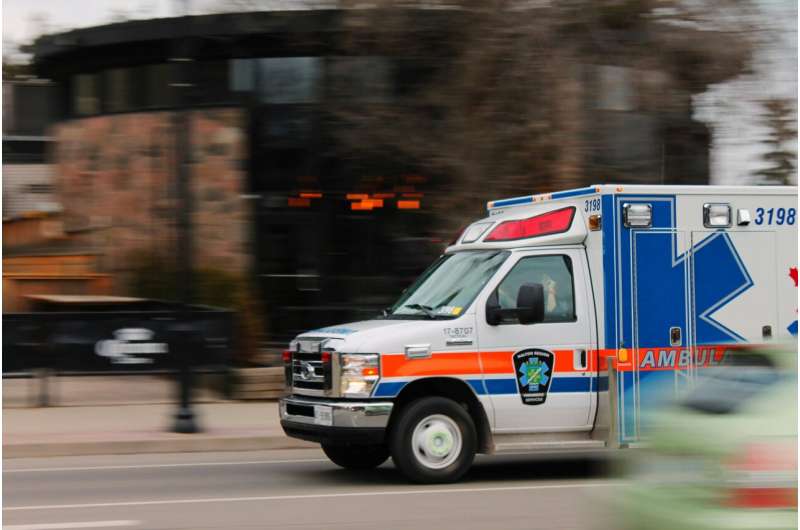
Researchers and clinicians at The Ohio State University assembled the team that developed the guidelines, which apply to law enforcement officers, corrections personnel, firefighters and emergency medical technicians (EMTs)—a group of professionals at high risk for violent interactions, falls and car crashes working in a demanding culture that makes it tough to seek help.
While addressing injury prevention, treatment and return to duty, the recommendations also recognize that better outcomes will require education, supportive reporting practices and organizational cultures that enable first responders to identify injuries and access appropriate care. The authors wrote in the paper that management of traumatic brain injuries in first responders “must shift from an individual burden to an organizational responsibility.”
“The first step is recognizing that TBI is a problem in first responders. I think everybody thinks of it as a sports problem, but there are a lot of other populations that TBI impacts, and, clearly, first responders are one of them,” said lead author Jaclyn Caccese, associate professor in the School of Health and Rehabilitation Sciences at Ohio State.
“We don’t have to start from scratch. There is a lot we can learn from sports and the military, but those approaches have to be adapted with first responders to reflect the realities of their work. That partnership is really important if we want the recommendations to be practical, trusted and ultimately useful.”
The authors convened at Ohio State last spring to pursue consensus on protocols surrounding six frameworks that they had been discussing in smaller groups for months before they met:
- workplace policies
- injury prevention measures
- challenges of recognizing injuries
- diagnosis and treatment of the injury
- mental health monitoring
- steps needed to get a concussed first responder back to work
Though concussion research on athletes and military personnel has informed this work, the complex nature of first responders’ responsibilities brings a different set of challenges after a TBI: Symptoms can interfere with duties that require making split-second decisions, while driving at high speed with lights and sirens can provoke symptoms. Shift work disrupts sleep, which is essential to repairing the brain. An additional strike to the head could set back the recovery process.
The recommendations emphasize shared organizational responsibility, supportive and nonpunitive reporting and referral processes, clinician-guided care, occupation-specific return-to-duty progression and continued research partnerships with first responder communities.
Two recently published studies led by Caccese and colleagues provided new details on the size of the problem of TBIs in first responders.
In a statewide survey of Ohio law enforcement and corrections officers, 64.1% of respondents reported at least one lifetime TBI, and 28.3% reported duty-related TBI. Nearly three-quarters of the duty-related injuries had never been diagnosed or treated.
A review of 23 studies of TBI occurrence in first responders showed the prevalence of a lifetime TBI in this population was 58.8%. The research also showed there is a high risk for TBI in firefighters and revealed that head injuries in EMTs have barely been studied at all.
“The idea is to look at what are the common mechanisms of injury, how long does it take officers on average to hit those milestones, and what do their trajectories look like?” said Caccese. “And we’ll also look at the risk factors for persisting symptoms—for officers who do take longer to recover, why do they take longer to recover?”
Many other consensus statement authors are working to shrink the gap in research on TBI in first responders and helping spread the word about the recommendations and the collaborative process that led to them. A major next step is working with first responder organizations to determine how the recommendations can be implemented across different agencies and occupational settings. Caccese and colleagues are presenting the consensus statement at the International Association of Chiefs of Police in late October.
Though there is a lot more work to be done, Caccese said publication of the recommendations is a significant milestone in the effort to build more consistent, evidence-informed systems of TBI care with and for first responders, whose workplace safety and well-being “really affects everyone.”
“A first responder should not have to recognize a TBI alone, decide whether reporting it could threaten a career, find a clinician who understands the demands of the job, negotiate appropriate work restrictions, and determine when it is safe to resume a high-risk duty,” she and colleagues wrote in a preface to the topical issue of the journal. “Yet in many settings, there is no clear system to guide that process. The consensus statement offers a framework for beginning to build one.”
Publication details
Jaclyn B. Caccese et al., Consensus Statement on Traumatic Brain Injury in First Responders: The 1st International Conference on TBI in First Responders, Journal of Head Trauma Rehabilitation (2026). DOI: 10.1097/htr.0000000000001221
Journal information:
Journal of Head Trauma Rehabilitation
Key medical concepts

Citation:
Brain injury care guidelines for first responders released (2026, October 17)
retrieved 17 October 2026
from https://medicalxpress.com/news/2026-10-brain-injury-guidelines.html
This document is subject to copyright. Apart from any fair dealing for the purpose of private study or research, no
part may be reproduced without the written permission. The content is provided for information purposes only.