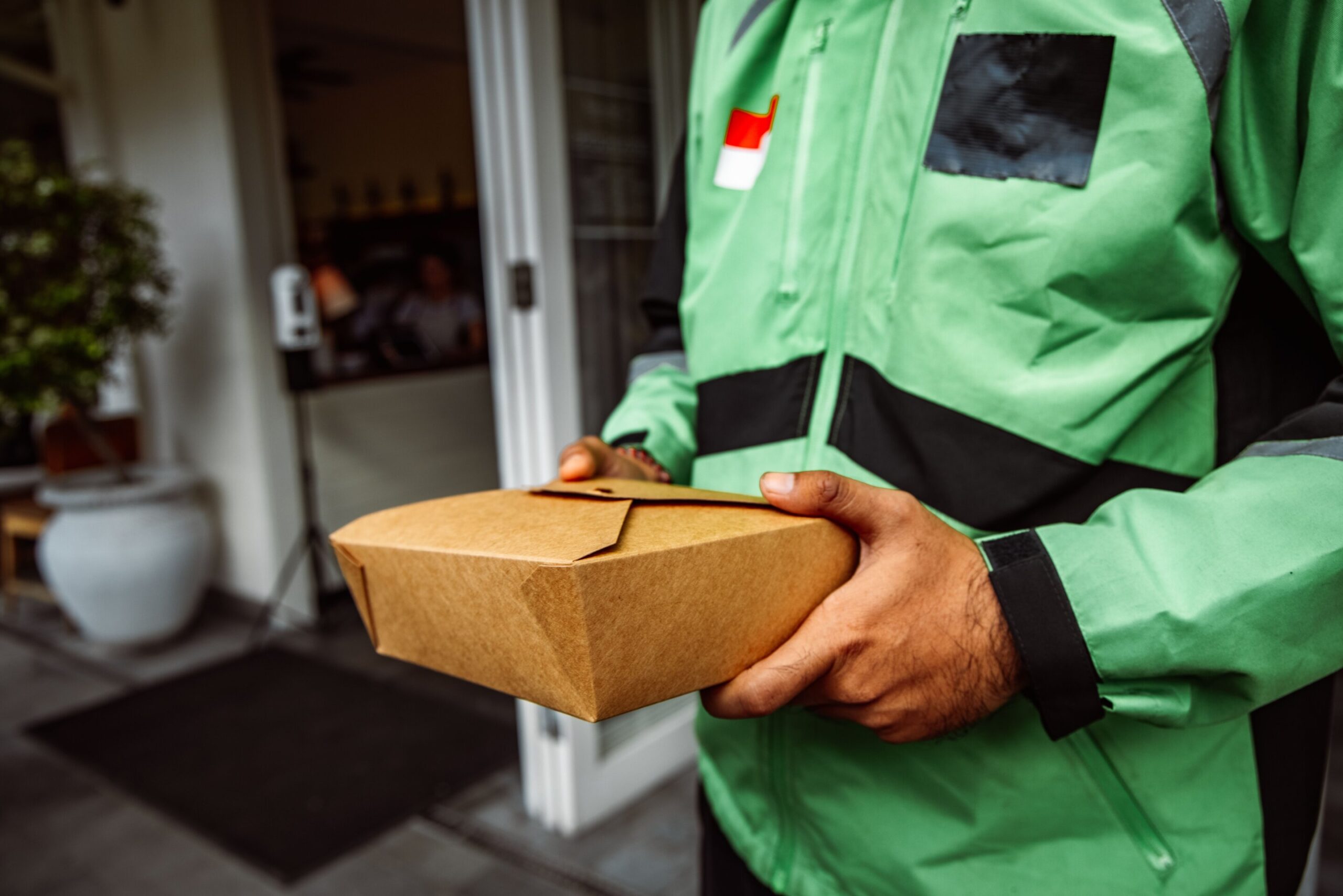
New research has revealed how meal delivery apps are steering Australians toward unhealthy food options, prompting calls from experts for government action to reset the balance and make choosing healthy options easier and more affordable.
The national study, led by researchers at SAHMRI’s Health Policy Centre, published today in the Australian and New Zealand Journal of Public Health, revealed that food delivery apps such as Uber Eats and DoorDash are widely perceived by consumers as a source of treat foods, with promotional deals playing a powerful role in shaping what Australians choose to eat.
Researchers conducted 12 focus groups with 112 adults across Australia, exploring how consumers use meal delivery apps and how promotions, app design and nutrition information influence their choices.
It’s one of the first studies in Australia to examine consumer perceptions of meal delivery apps beyond frequent users and provides timely insights as governments look to strengthen regulation around junk food marketing, particularly to children.
Lead author Jess Morrison, a Ph.D. candidate and researcher at SAHMRI and Adelaide University, says the findings confirm a growing disconnect between the rapid expansion of meal delivery apps and existing government nutrition policies designed to support healthy eating.
“People told us that when they open a meal delivery app, they’re not thinking about health; they’re thinking about convenience, indulgence and getting a deal,” Morrison said.
“Across every age group, participants associated meal delivery apps with unhealthy options, particularly fast food. That perception shaped how they used the apps and what they ordered.”
Participants consistently reported that promotional deals such as free delivery, 20% off and buy one, get one free were central to their decision-making, often tipping the balance in favor of ordering in, rather than cooking at home.
“Promotions weren’t just noticed; they were expected,” Morrison said.
“People described scrolling for deals before they even decided what to eat. Many said that offers helped justify the cost of using the apps and reduced the guilt of choosing less healthy foods.”
The study found limited interest in nutrition information on meal delivery apps. While some participants acknowledged that calorie labels or health ratings might influence heavy users, most said they would ignore them when ordering a “treat.”
However, researchers say as meal delivery app use becomes more frequent, health may become a more important consideration and users are likely to become more interested in nutrition information.
“Evidence from other studies has shown nutrition information can help to improve the healthiness of food choices for more regular meal delivery app users,” Morrison said.
With meal delivery apps projected to continue expanding rapidly, the research highlights opportunities for government intervention.
“Right now, online delivery platforms sit outside many of the nutrition policies that apply in physical food environments,” Morrison said.
“We need to consider measures like increasing incentives for healthier options and limiting price promotions on unhealthy foods. Given how much promotions influence choices, policy action in this space could make a real difference.”
Adjunct professor Terry Slevin, CEO of the Public Health Association of Australia, is also concerned that current regulation isn’t keeping pace with technology.
“We need nationally consistent menu labeling requirements that apply wherever food is sold. Consumers should have access to the same nutrition information whether they order at the counter, through a restaurant’s own app or through a meal delivery platform,” Slevin said.
“We also need to address the way unhealthy food is promoted online. As the Australian government considers action on unhealthy food marketing to children, meal delivery apps and other digital food environments need to be part of that response.”
“These apps are yet another step in the direction of Australians eating more unhealthy food and away from healthy eating. And unhealthy diets are driving obesity rates, which in turn are driving increases in chronic diseases.”
Publication details
Jessica Morrison et al., Deals for delivery: Exploring consumer perceptions of price promotions and nutrition information on meal delivery apps, Australian and New Zealand Journal of Public Health (2026). DOI: 10.1016/j.anzjph.2026.100598
Journal information:
Australian and New Zealand Journal of Public Health
Key medical concepts
Provided by
Australian and New Zealand Journal of Public Health


Citation:
Meal delivery apps could be driving us toward unhealthy choices (2026, October 28)
retrieved 29 October 2026
from https://medicalxpress.com/news/2026-10-meal-delivery-apps-unhealthy-choices.html
This document is subject to copyright. Apart from any fair dealing for the purpose of private study or research, no
part may be reproduced without the written permission. The content is provided for information purposes only.