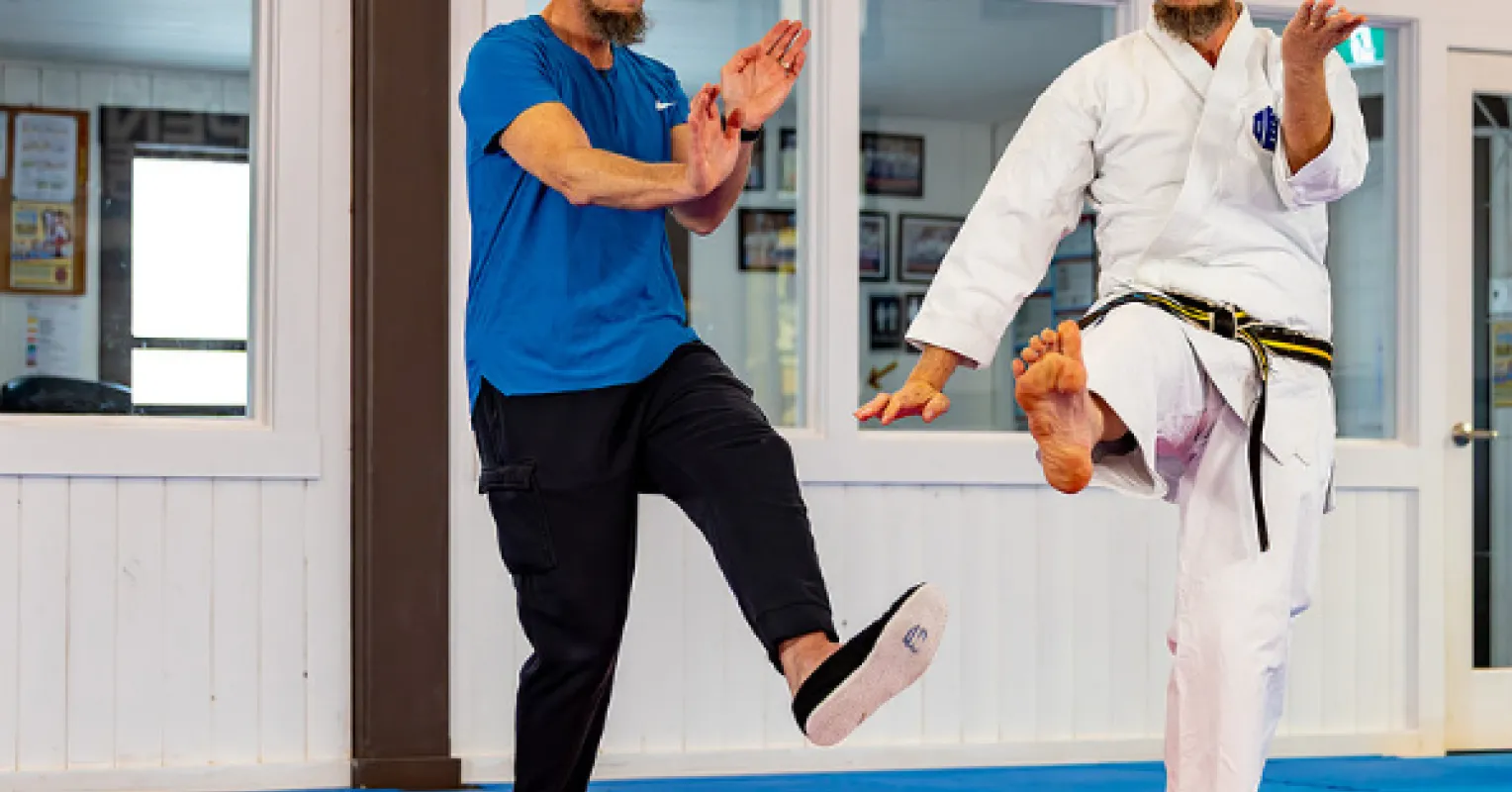
“Karate is for defense only,” Mr. Miyagi famously told Daniel-san in “The Karate Kid.” In contrast (sort of), Cobra Kai advised to “strike first, strike hard, and show no mercy.” Mr Miyagi’s quote seems to echo an ethos from Okinawan and Japanese traditions that advise “karate ni sente nashi”; there is no first attack. But which is correct?
Making sense of defense
The basic core of many martial arts is self-protection throughout all situations. It is key to always be aware of the unfolding situation, get out of the way of the threat by moving forward and off the direct line from the opponent to place yourself in a safe position to respond. Initially, stopping the threat may require hitting lethal targets (e.g., a punch to the throat) because your skill is not high enough. The next training stage is hitting targets to incapacitate (e.g., kicking the knee to tear ligaments) and provide an opening to escape and get away. The highest level, when actual physical exchange is inevitable, is dodging and avoiding all attacks and escaping.
I prefer the concept of self-protection rather than self-defense. Self-protection involves proactive attack, while self-defense implies waiting to be attacked and then responding. Defense encourages backing up and attacking moving forward. But if we are truly under threat, only defending permits constant repeated attacks. Self-defense becomes a shield, whereas self-protection based on attack gives you a spear.
Many martial arts traditions recognize three psychological and physiological states related to physical encounters between you and an opponent: counterattacking, attacking while being attacked, and preemptive attack. These are listed in order of technical difficulty. Note that “attack” is used in all 3, it’s the timing of your attack that differs.
Counterattacking is responding to an attack after receiving, intercepting, or blocking that of our opponent. The timing of actions in this scenario is often attack 1: block 1, and then counterattack 0.5. Attacking while being attacked occurs when we detect the unfolding threat and respond immediately during the opponent’s attack. The timing of actions is attack 1: counterattack 1. Preemptive attack is taking action as soon as you perceive the opponent will attack but before they actually do. Subtle hints in body angle, visual gaze, breathing, and weight shift cue this. The timing of actions is preemptive counterattack -1: attack 0.
Of course, the highest level is to perceive an imminent threat and take preventative action to avoid the scenario completely, but this is often impossible.
Not the first to strike, but the first to hit
When attacking for self-protection, you might successfully defeat an opponent, but it is 100% certain that it is harder for the opponent to attack you.
There are many scenarios where we don’t want to hit, hurt, or harm someone. For example, a friend or family member whose capacity is altered by alcohol, drugs, or dementia. We want to avoid their violence but once we have a sufficient level of skill, we can hopefully do so without needing to strike.
You don’t have to hit but you also aren’t required to be hit. Attack-oriented, tactical body movement does not require you to strike, but it does keep you safe and put you in a good position to have many options.
Fist comes from the heart
So I revise the Cobra Kai mantra as “strike first, strike fast, show mercy” to align with the Wing Chun expression that “the fist comes from the heart”. This saying means two things: 1) occupy the centre line and attack the opponent directly; and, 2) your attack is meant to stop the aggression and allow safety. We hurt with compassion and only harm if needed.
But our responses have to be done dispassionately; deliberately and without anger. As the original Miyagi (Miyagi Chojun, 1888-1953; founder of Goju-ryu karate) said “when anger rises the fists must lower, when you raise your fists you must lower your anger”.
I can agree 100% with something else Mr. Miyagi said in Karate Kid II, though, that the best way to avoid a punch is to “not be there.” But if we have no choice and have to be there, we must take the initiative. When the only way out is through, the best defense truly is a good offense.
(c) E. Paul Zehr (2026)