Quentin Webb was told he had just eight to 12 months to live after doctors discovered advanced kidney cancer that had spread to his lungs. Nearly 20 years later, he is in remission, having survived a disease that his family feared would rob his young son of his father.
His extraordinary story, reported by the Daily Mail, illustrates the potential of immunotherapy to produce exceptionally long-lasting remissions in some patients with advanced cancer, while highlighting the consequences of delayed diagnosis and the remarkable evolution of kidney cancer treatment.
Exhaustion, Unexplained Weight Loss and a Diagnosis that Came Too Late
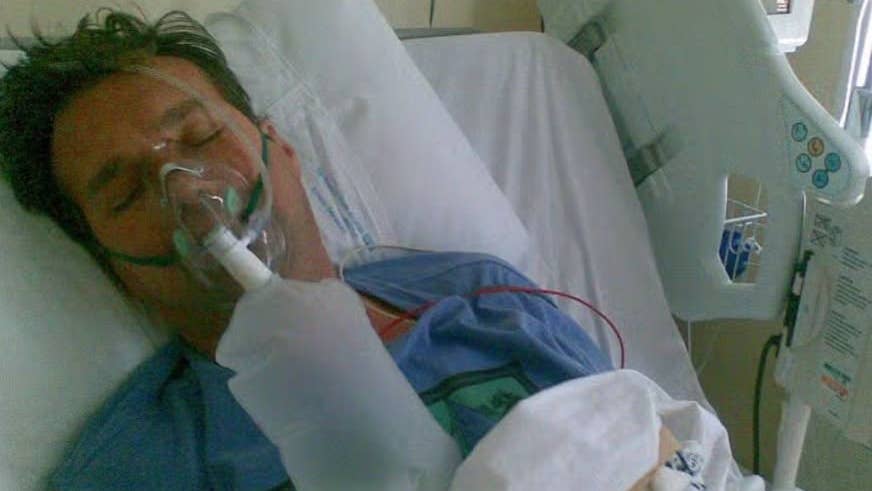
Webb, from Rickmansworth, Hertfordshire, was 46 when he began experiencing unusual fatigue in September 2005. He also lost weight unexpectedly and developed an enlarged testicle. An active man who had competed internationally in dragon boat racing, led Scouts, and enjoyed sailing and climbing, he initially attributed his symptoms to other causes.
His wife, Helen, now 61, recalled thinking, “Oh, bless, he’s getting older.” But when her husband began falling asleep at the dinner table, she suspected something more serious.
According to the couple’s account, an initial visit to their GP did not lead to blood or urine tests. A scan of Webb’s testicles reportedly found nothing. After seeking a private second opinion in April 2006, he was diagnosed with a varicocele, an enlargement of veins in the scrotum. Surgery to remove the affected vein failed to resolve the problem.
Helen subsequently urged her husband to pursue further investigations after consulting her sister, who is a doctor. In October 2006, the underlying cause was finally identified: kidney cancer. Further examinations revealed that the disease had spread to his lungs, placing him at stage four.
Surgeons removed a tumor weighing approximately 3.5lb (1.5kg), along with Webb’s left kidney and left adrenal gland. Helen reportedly likened the mass to a small baby and said surgeons had to break his ribs to remove it.
Yet surgery could not eliminate the threat posed by cancer that had already spread throughout his lungs. The couple said doctors told them there was “nothing we can do” and estimated that Webb had less than a year to live.
Kidney cancer can be difficult to detect because early disease frequently produces no obvious symptoms. The NHS lists unexplained weight loss, persistent fatigue, blood in the urine, persistent pain beneath the ribs and unusual swelling among possible warning signs. None of these symptoms alone proves cancer, but persistent or unexplained changes warrant medical assessment.
The Experimental Treatment that Gave a father Hope
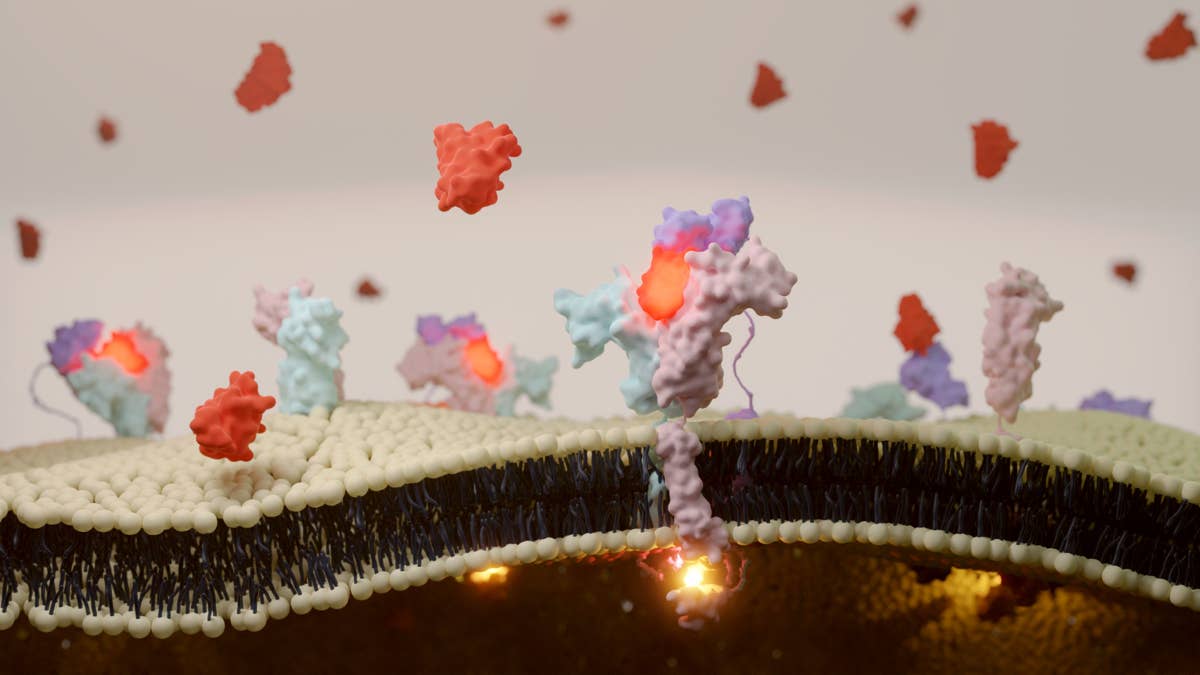
Helen refused to accept that her husband’s prognosis was the end of the story. She discovered high-dose interleukin-2 (IL-2), an immunotherapy that was then available at only a limited number of specialist centers in North America and Europe.
The treatment uses a naturally occurring immune-signaling protein to stimulate immune cells against cancer. After discussing the option with Webb’s medical team, Helen began investigating treatment in the United States. The couple subsequently learned that Manchester’s The Christie NHS Foundation Trust was pioneering the therapy.
Webb began treatment in July 2007. Recalling the hundreds of cancer spots scattered throughout his lungs, he told the Daily Mail: “You’ve got a two-year-old who’s waiting for you and needs you.”
Helen described the emotional stakes: “Quentin was facing not being here at all, and I was facing the prospect of when he’s not there, thinking, how do I bring this child up who doesn’t have a father?”
The treatment continued until August 2008, although it caused severe side effects, including extensive skin flaking. Webb subsequently underwent surgery to remove as many remaining cancerous spots as possible. Helen recalled receiving a call from the medical team saying: “I’m confident we’ve got it.”
Scientific evidence helps explain why the treatment proved so consequential. A 2011 study by researchers affiliated with The Christie, published in the Journal of Immunotherapy, examined 72 patients with metastatic kidney cancer. Among 57 patients with favorable tumor characteristics, 14 achieved complete remission. The researchers reported that these remissions appeared durable.
The US National Cancer Institute has likewise described high-dose IL-2 as a treatment capable of producing durable complete remissions in approximately 5% of eligible patients with advanced renal cell carcinoma. However, this outcome occurs in a minority, and the treatment’s serious toxicities limit its use.
Webb’s recovery was not entirely free of subsequent complications. In 2015, cancer was discovered in his right adrenal gland and surgically removed. He now requires lifelong steroid medication following the removal of his adrenal glands.
Nevertheless, IL-2 ultimately put him into remission, allowing him to live far beyond the original prognosis.
Twenty Years Later, a Medical Milestone with Wider Implications
Today, Webb continues to sail, climb, and volunteer as a Scout leader. He attends medical check-ups twice a year and has raised £50,000 for The Christie Charity.
His son, Oakley, was just two when his father’s cancer was diagnosed. He has since grown up, attended school and graduated from university, fulfilling milestones the family once feared might be impossible.
Helen recalled telling her husband that she simply wanted him to see their son start school. Webb replied that he wanted to see Oakley begin secondary school.
“I thought we had no hope of that, no hope whatsoever,” she said. “Celebrating 20 years is a real landmark and it does make you think, Oakley’s now grown up and we do have an absolutely normal life.”
Webb’s experience also belongs to a larger transformation in cancer medicine. High-dose IL-2 has largely been superseded by newer immunotherapies, including checkpoint inhibitors such as nivolumab, pembrolizumab and ipilimumab, alongside targeted treatments. These therapies have expanded options for advanced kidney cancer, although responses and side effects vary between patients.
While Webb’s survival may not be interpreted as proof that optimism or a particular treatment can overcome every cancer diagnosis, his outcome was exceptional. High-dose IL-2 can be dangerous and is appropriate only for carefully selected patients under specialist supervision.