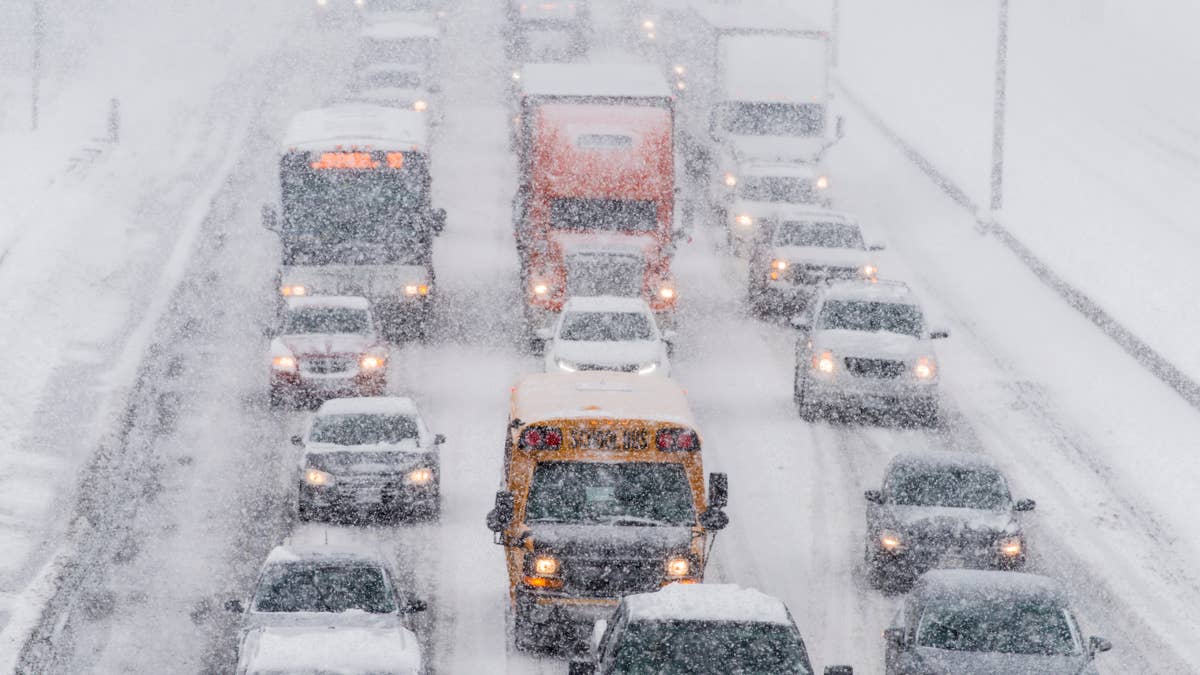
The National Oceanic and Atmospheric Administration has issued a series of Winter Weather Advisories that affect four states. The forecasts call for up to 15 inches of heavy snow and wind gusts reaching speeds as high as 55 mph.
When and Where 15 Inches of Snow and 55 MPH Winds Are Forecast
Late at night on November 1 and early in the morning on November 2, NOAA issued Winter Weather Advisories for areas of Wyoming, Colorado, Utah, and Montana. Forecasters called for winter storms to arrive early on Monday and last throughout the day.
The harshest conditions are forecast for Wyoming, where up to 15 inches of snow and 55 mph wind gusts could hit the highest peaks of the Bighorn Mountains. According to the agency, those conditions could create travel difficulties across mountain passes as six to 10 inches are also forecast for lower elevations. Elsewhere, the North Laramie Range is facing between six and 12 inches of snow and 50 mph winds. Additionally, the Sierra Madre Range, Snowy Range, and areas along the Interstate 80 Summit could be hit by powerful wind gusts and between two and 12 inches of snow.
In Colorado, the Winter Weather Advisories are calling for five to 10 inches of snow to hit the Flat Tops, Gore and Elk Mountains/Central Mountain Valleys, Grand and Battlement Mesas, and West Elk and Sawatch Mountains. Those conditions are expected at elevations above 10,000 feet, where 35 mph wind gusts are also forecast.
Colorado’s ski towns like Breckenridge and Winter Park are forecast to see between three and seven inches of snow. While that is great news for skiers, NOAA warns that those conditions could impact local commutes. Roads are expected to become slippery in the area of Rabbit Ears Pass, Rocky Mountain National Park, and the Medicine Bow Range, where four to nine inches of snow are forecast.
In Montana’s Pryor/Northern Bighorn Mountains, wind gusts could reach 45 mph as up to 10 inches of snow arrive. As a result of the snow and wind, traffic across Highway 14 may become “very difficult” as visibility could be diminished.
The National Weather Service’s Salt Lake City office has also issued a Winter Weather Advisory for the Wasatch Mountains South of I-80 and the Western Uinta Mountains. It warns of dangerous driving conditions and the potential for downed tree branches as an additional two to four inches of snow and winds reaching 45 mph strike.
Next: Winter Storm Travel Kit: Safety Experts Share the Must-Have Items Drivers Often Forget