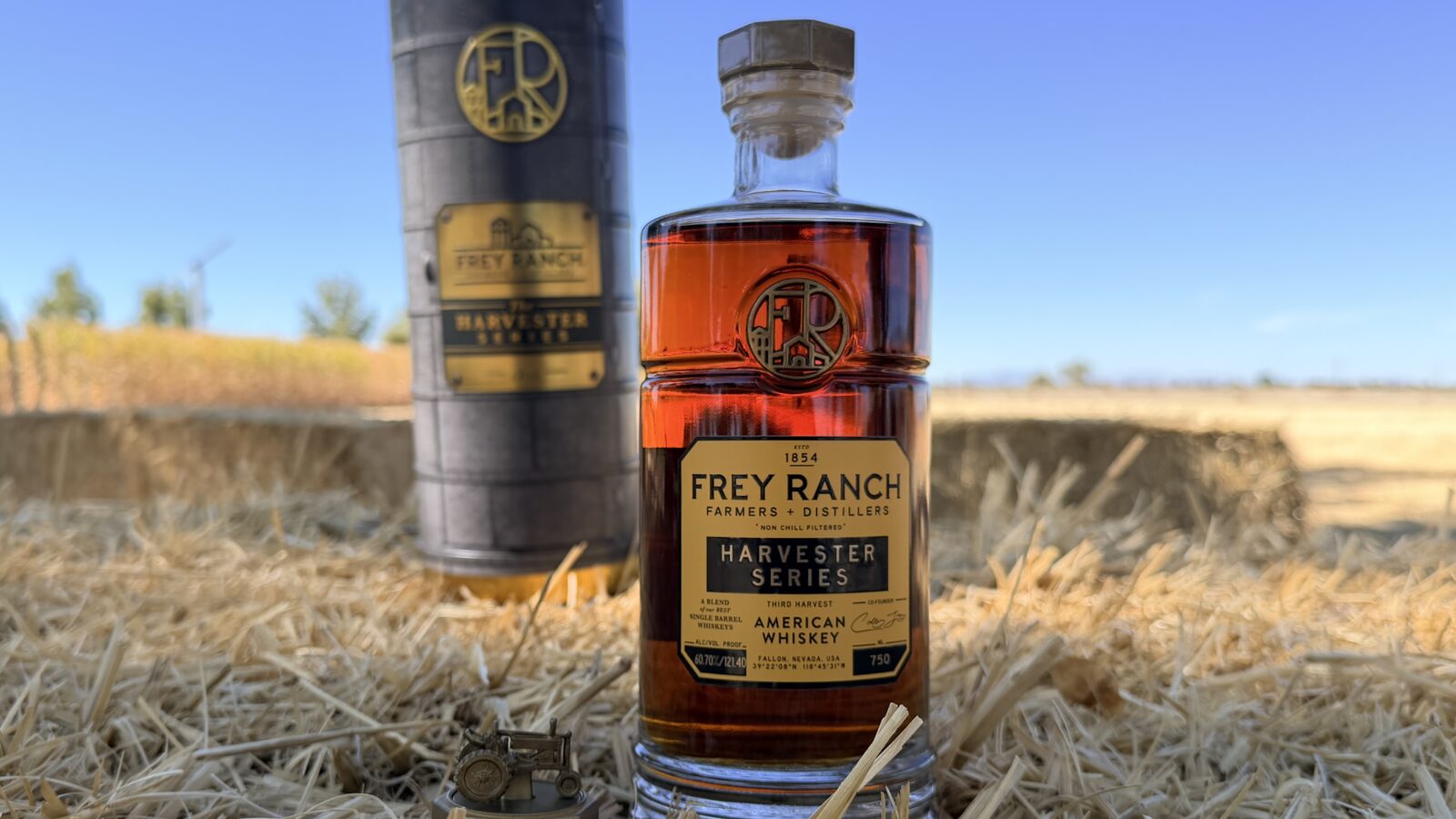
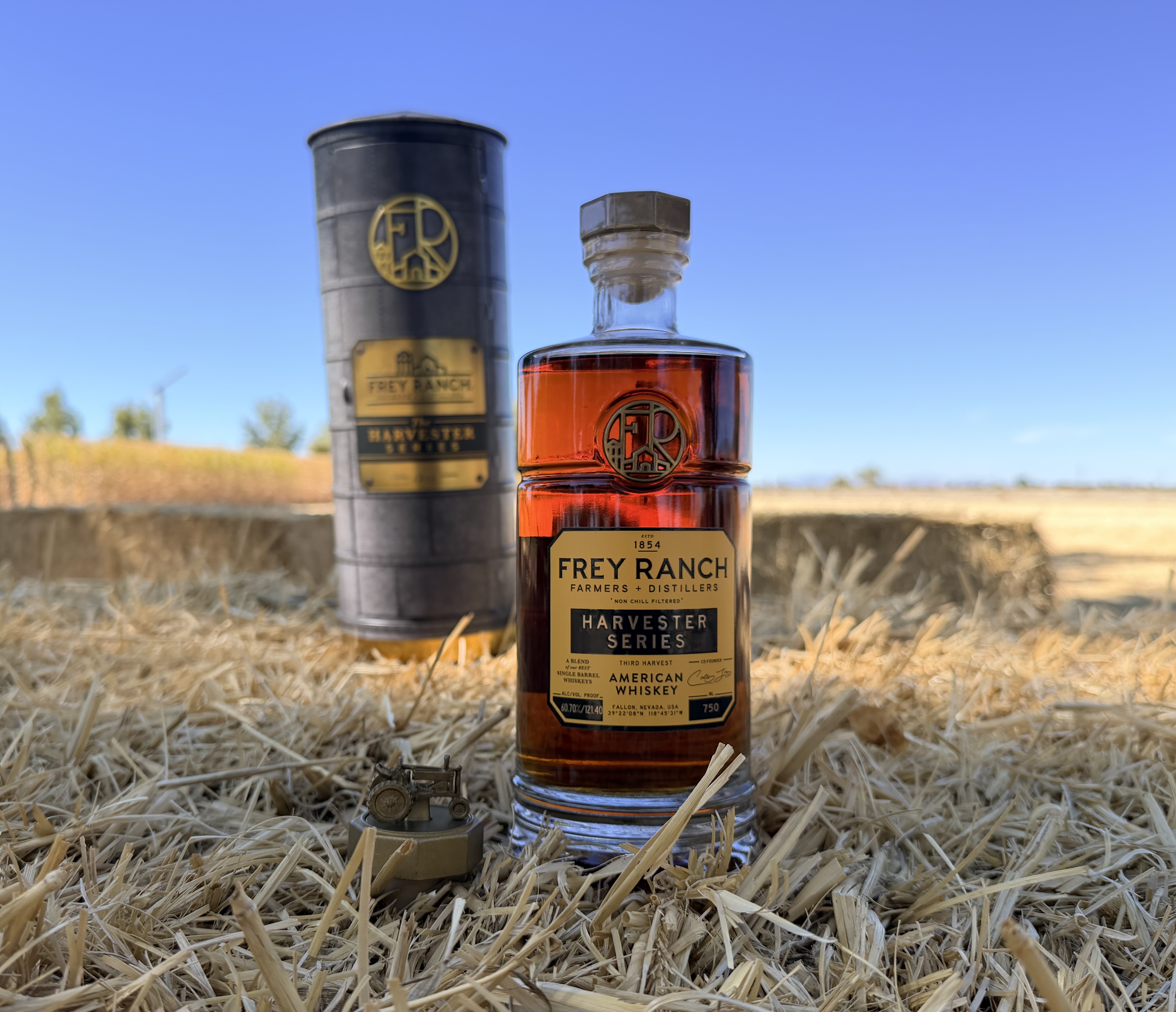
From seed to bottle, Nevada’s premier grain-to-glass distillery transforms a humble ranch crop into the crown jewel of its Harvester Series.
There’s something special happening in Fallon, Nevada—a quiet farming town outside of Reno better known for mysterious UFO sightings and its Top Gun academy than anything whiskey related. You wouldn’t know it taking a Sprinter van there from The Biggest Little City In the World though; the only thing that absorbs your vision for the last half-hour of the journey is an endless blur of green corn—miles and miles of wheat, alfalfa and other crops soaking in the sun as you approach the gates of Frey Ranch.
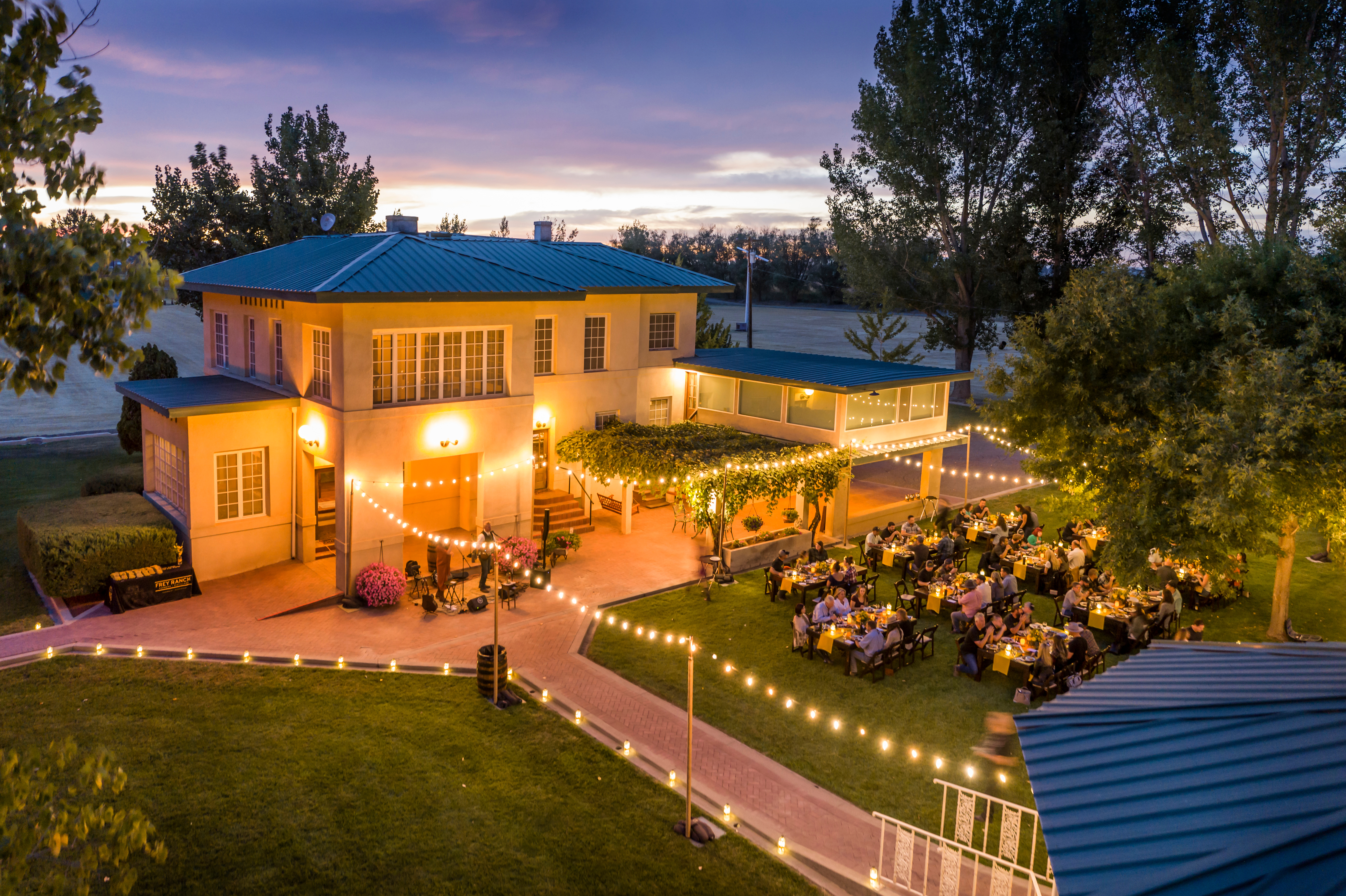
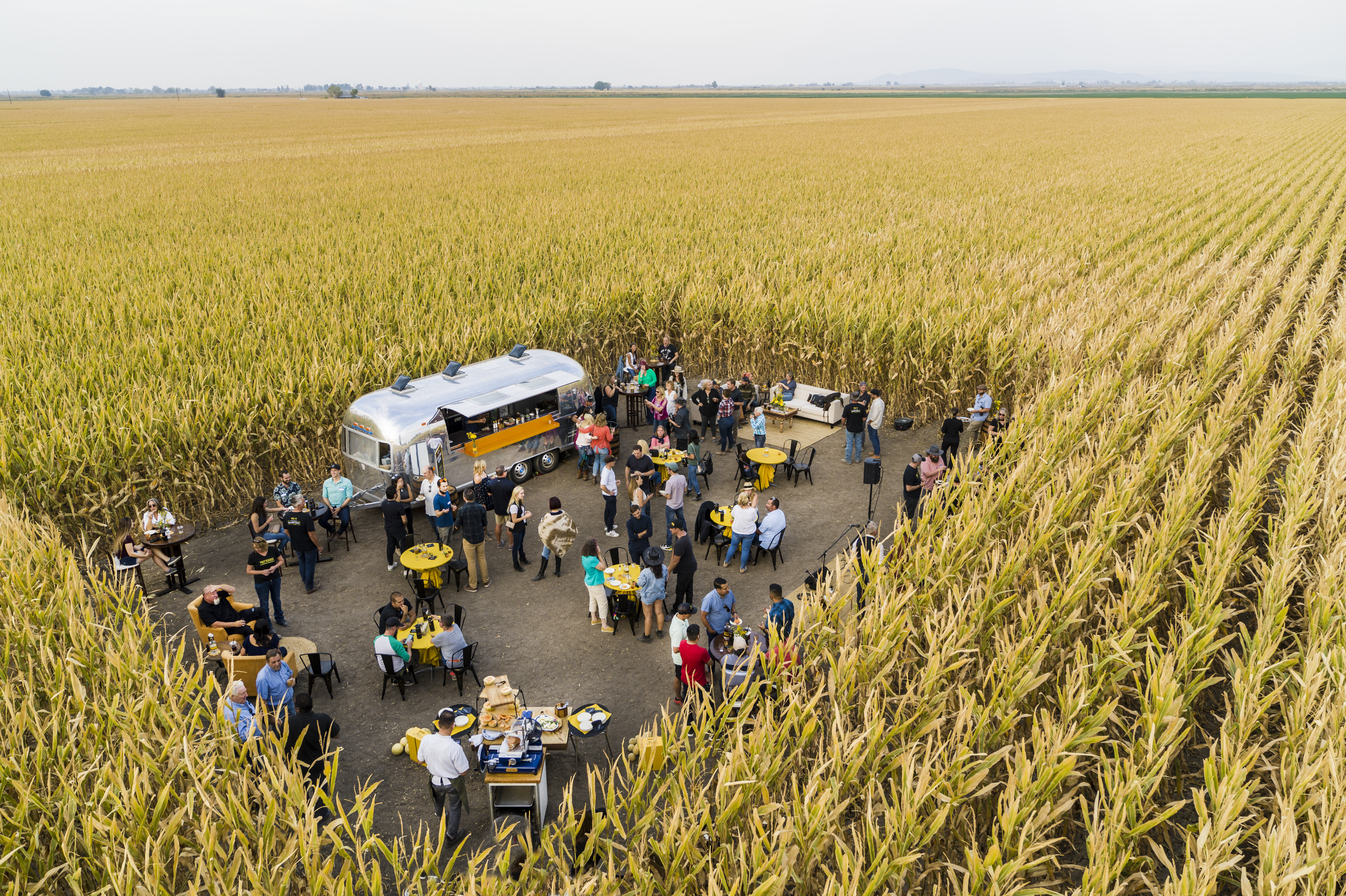
As we roll to a stop between the farm’s main house and the distillery, right next to the giant grain silos that have become their whiskey endeavor’s official logo, Colby and Ashley Frey stand outside to greet us to their Whiskey Harvest Dinner. Yes, the tradition started as a way to celebrate the bounty of their fields, but another ritual has grown from its original intentions like an oak branch—the unveiling of the family’s most anticipated whiskey: the annual Harvest Series. A totally unique, wildly imaginative blending of barrels that each year celebrates the variety of whiskey made entirely within the confines of this 2,500-acre farm.
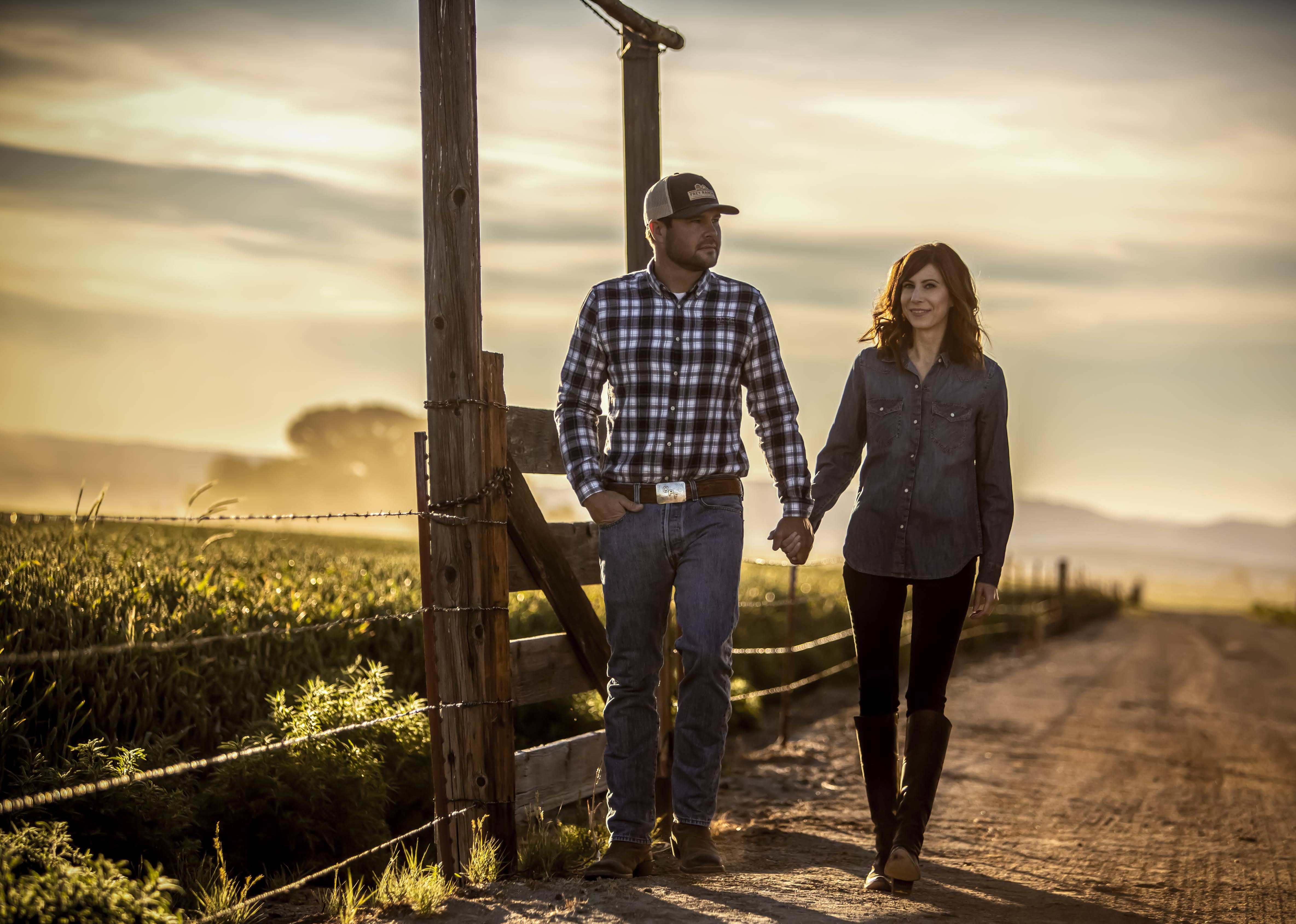
You see for almost 170 years, the Freys’ hands have tended these fields. While alfalfa is the family’s cash crop, in between seasons they’d grow rye, wheat, corn and other grains as cover crops, and to remineralize their soil. Then sometime around 2006, fifth generation farmer Colby had an epiphany: Why are we selling these grains as forage?, he asked himself. Why not, you know, do something more fun with them? As an avid whiskey aficionado, Colby looked at his harvest and noticed their unmistakable synchronicity with what it takes to make whiskey. That moment Frey Ranch whiskey was born in spirit.
So now not only do they grow all their own grains on these fields, but the Freys also ferment, mash and distill all the whiskey themselves in the distillery a stone’s throw from their house. They then mature every barrel in their own giant rick houses behind the distillery, and then blend and bottle here as well. It is true farm-to-bottle distilling: every grain grown on this fertile soil, every step executed on the farm. And the annual Harvester Series is the crown jewel of this hands-on engineering.
“The Harvester Series is a way of celebrating our grains the same way wineries celebrate the crush,” Colby tells Maxim while we explore the farm on side-by-sides, likening the annual release to a winery’s grape juicing season. “Which we are able to do because we are one of only a handful of distilleries in the world that grow 100% of the grains used to produce our whiskeys.”
That closed loop is the reason the Harvester Series exists. A distillery that buys its grain works with whatever a supplier happens to grow, while Frey Ranch can decide in the spring what it wants to distill in autumn, and then plant accordingly. Their Master Distiller Russell Wedlake tells us later how he once mused using a rare heritage corn, and after a single conversation with Colby a small corner of their farm was planting it within weeks. No other American whiskey maker boasts that level of agility, and its complimentary creative palate.
“The Harvester Series is a way of celebrating our grains the same way wineries celebrate the crush. Which we are able to do because we are one of only a handful of distilleries in the world that grow 100% of the grains used to produce our whiskeys.”
Colby Frey, 5th generation farmer and Frey Ranch Founder
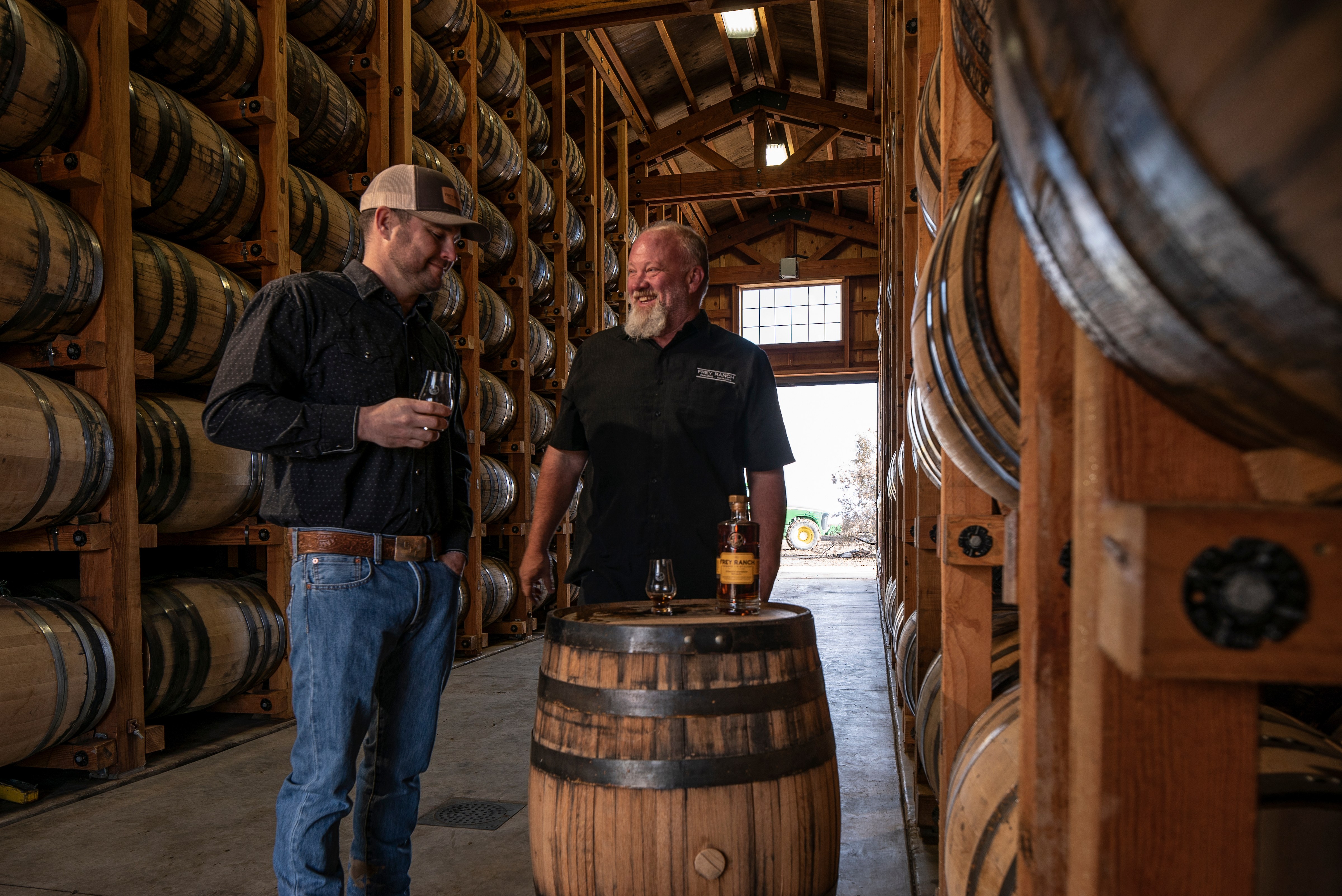
For the First Harvest, launched to celebrate Frey Ranch’s 10th Anniversary selling whiskey, the team—which includes famed Master Blender Nancy “The Nose” Fraley—tried 14 mash bills and hundreds of single barrels. Fittingly the final blend drew on all five grains the farm grows: wheat, rye, barley, corn and oat. The Second Harvest was built on wheat, with malted barley as a supporting player. Now the Third Harvest brings in a grain that has rarely appeared in any whiskey bottle: triticale.
The obscure hybrid grain was created in the 1800s when breeders crossed wheat (Triticum) and rye (Secale), hoping to combine the former’s yield and grain quality with the latter’s toughness, disease resistance and drought tolerance. It never took off in bakeries, because triticale’s gluten is too weak to hold up a good loaf. But it’s still popular in ranching, as most of the world’s triticale ends up as livestock feed or forage, as a cover crop that keeps topsoil from blowing away, or as biomass for ethanol production. In a mash bill, however, it behaves better than that résumé suggests, offering some of rye’s pepper alongside the soft, sweet, bready quality of wheat. Frey plants it each year as a winter grain, on the same schedule as his wheat, rye and barley.
This forgotten grain found its way into the blend through the tasting table, the same way everything else does at Frey Ranch. The team doesn’t arrive to the white board with a preconceived concept when deciding what that year’s Harvest Series expression will be—rather they come with an open mind, a spectacularly varied inventory, and the ability to let Fraley’s legendary palate, and nose, lead the way. “We sent our blending partner Nancy hundreds of samples, including the triticale, and she really gravitated towards the complexity it added to the final blend,” Colby explains before our celebratory dinner, on a quiet moment while by the edge of a corn field. He reveals how what ends up in the bottle really depends on which barrels are tasting best on the day she sits down with them.
Which reminds me of something Fraley told us last year in regards to their Second Harvest. “You have to just let the barrels with their different grains tell you what is best in any given moment; you have to be silent and listen to how they are telling you how best to blend them at any given time.” This year, apparently the triticale did a lot of the talking—but not all. At 26.66% of the mash bill, it is a hefty lot—but not the main grain. The rest is 36.14% corn, 27.92% rye, 4.80% malted barley and 4.48% wheat, all drawn from barrels aged five to eight years, and bottled at a potent 61.70% ABV.
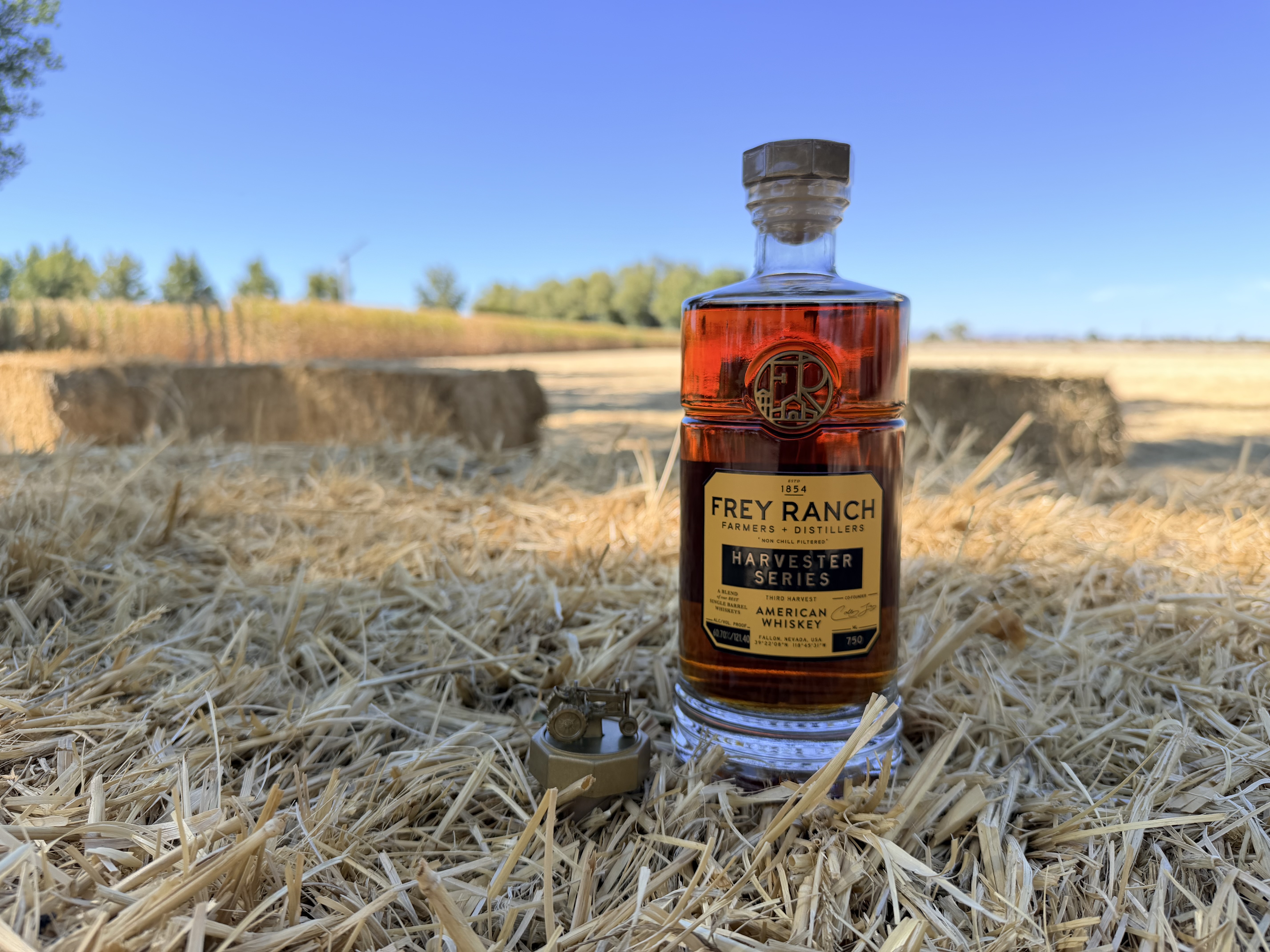
You’ll find that Third Harvest is more than just an interesting story and mash bill—it is a fascinating, complex and yet smooth whiskey. Sipping it with Colby in his former barn-turned-tasting room, we all pick up different cues: a nose with orange marmalade and orange jelly candy; the palate bringing fresh pear and honey along with, somewhat improbably, teddy grahams—probably thanks to that triticale. And the finish settles into graham cracker and caramelized brown sugar.
Third Harvest goes first to members of the new Tractor Tailgate Club, which is capped at 500 memberships at $999 a year (and includes a bottle of Third Harvest as well as several more limited run expressions every month). A set number of bottles will go through an upcoming online lottery, open from November 16 through the night of November 23 for its SRP of $300, and Nevada locals and Frey Ranch fanatics can flock to the tasting room in person starting November 7. If you manage to get your hands on one, flip the bottle to see what it’s all about for Colby, Ashley, Nancy, Russell and their team. Each bottle carries the family motto embossed in glass on its underside, a line that sums up the whole operation: “Be good to the land and the land will be good to you.”
Follow Executive Editor Nicolas Stecher’s travel, spirits, automotive and F&B adventures on Instagram at @nickstecher and @boozeoftheday.