Can the likes of Artcraft shake up the world of pricey subscription software?

Vibe coding has taken a wild new turn. Earlier this month, a developer motivated by hatred for Adobe’s subscription model used Claude to reverse-engineer Photoshop, Lightroom and other Creative Cloud apps. The team then used that information to create open-source clones of those apps with similar functionality that anyone can download (and modify) for free.
Individual coders are creating their own apps through reverse engineering and even adding features to existing ones. This has sparked intense debate. Some feel abusive subscription app makers are getting what they deserve, while others see it as simple piracy. The speed of AI’s spread is creating new legal ramifications around patents and copyright that still need to be explored.
Artcraft sets its sights on Adobe
Free or open-source software like GIMP instead of Photoshop, Darktable instead of Lightroom, or DaVinci Resolve instead of Premiere has existed for years, if not decades. Those can do many of the same things as their Adobe counterparts (if not more), and are free. However, Most users don’t want the “switching costs” of learning something entirely new after years of building muscle memory in Adobe’s apps.
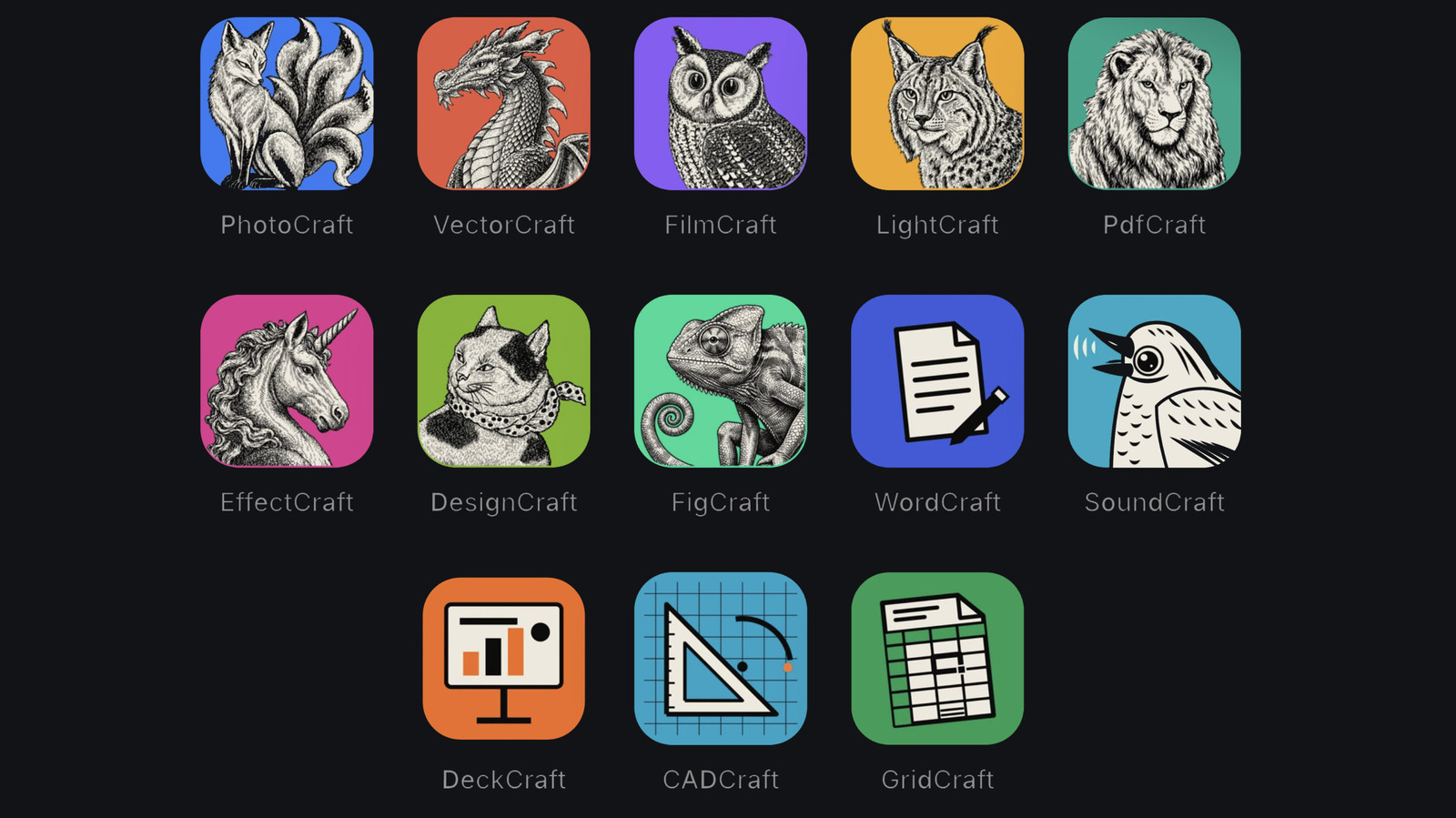
Enter Artcraft. Software developer Brandon Thomas and his team first launched these Adobe suite clones in early October. The pitch was that they’re a one-to-one replacement for Creative Cloud apps with a similar user interface, but are “free [with] no subscription, and you own the source code,” the team said on Reddit.
Thomas decided to reverse engineer the Creative Cloud apps after getting “bit by [Adobe’s]… dark pattern ‘cancellation fee‘ one too many times,” he revealed on Hacker News. To do so, he used Claude Opus 5.5 to create “clean room… pure Rust” versions of each that he claims are more performant than the original apps.
I was skeptical when I first heard about Artcraft, but was surprised after trying the developer’s Photoshop replacement, Photocraft. Though it lacks AI and other advanced features, Photocraft can do almost everything I need, like resizing, masking and color adjustments. Better still, all of the menus and controls are nearly one-to-one matches for Photoshop, so I was able to use the app immediately with no steep learning curve. It may not be a substitute for power users, but it could be good enough for many Adobe subscribers.
There are still issues. Users have reported critical bugs in Photocraft, including the app deleting images, randomly merging layers and lacking stability. I also noticed that it can’t open native PSD Photoshop files, which is a huge problem for existing users.
Adobe’s apps aren’t the end of Thomas’ ambitions. “Software is over… AI lets us take back tech and set the clock back to the pre-sh***y era.”
Reverse engineer anything
The Photocraft team members are experienced coders, but that doesn’t mean the average person is shut out of the trend. An application called REA (Reverse Engineer Anything) has gone viral over the last several weeks with 87K forks and 346,000 stars as of October 20. It does “exactly what it says on the tin,” as the old UK ad goes, letting you deconstruct software and reconstruct it in clean code.
“It can inspect the app without its source code, explain how the feature works, show the evidence, and build a version for your project,” according to REA’s GitHub description.
In other words, DEA (and similar techniques and AI repositories) offers a way to deconstruct and recreate apps or websites much like the ArtCraft team did, but more automatically. It can be used not only for software running on smartphones or computers, but also for firmware in consumer devices like TVs, refrigerators, musical instruments and smart frames.
This work also involves digging into games on multiple platforms. Recent feats include full decompilations of Tiger Woods PGA Tour 2004, Final Fantasy Tactics Advance and Metroid Prime. A website called decomp.dev, dedicated to (human) reverse engineering of games, recently announced it’s shutting down because AI-driven decompilation has overrun the community, as 404 Media recently reported.
The reaction so far
Vibe coding with AI has existed for a while, but reverse-engineering software and cloning it is a relatively recent phenomenon. One Reddit commenter said about Artcraft: “Having built Photoshop readers/writers in the past, I know the challenge just in dealing with the file format. Then you have the sheer amount of UI/UX to implement well. And this looks exceptionally well-executed.”
Not everyone is impressed. “What rubbish, this codebase will be unmaintainable in a few months,” one critic on X said about Photocraft, citing a lack of understanding of the concepts behind the apps. Another who tried that app called it “utter AI-driven slop” that “blatantly infringed” on Adobe’s trademarks and copyrights.
That legal aspect could be another barrier. Though the Artcraft team said they never used a single line of Adobe’s code, they may have violated Photoshop’s trademarks and patents and those of other apps. Adobe’s terms of use also explicitly ban reverse engineering of its software to determine how it works.
That said, Artcraft, REA and other apps have clearly opened Pandora’s box. A single person skilled with AI can now potentially do what used to take a team of engineers. That will likely lead to countless terrible, slop-ridden apps, but it could also force companies like Adobe to rethink business models that many people despise.