When Olivia Rodrigo began appearing in babydoll dresses, Mary Janes and other deliberately girlish silhouettes as part of her latest album era, the reaction was immediate—and surprisingly intense. What began as a defining visual language for her new music became a wider conversation about whether the clothes were playful or problematic, youthful or infantilising. Why, some asked, should a grown woman want to dress like a girl?
The intensity of the discourse seemed disproportionate to the clothes themselves. In an era when naked dresses, visible lingerie and micro shorts have become routine on runways and red carpets, why should a loose-fitting dress—with its empire waist and deliberately youthful proportions—provoke such unease?
Perhaps because the babydoll sits at the intersection of fashion’s longest-running tensions: femininity and feminism, youth and adulthood, innocence and sexuality.
Rodrigo is an especially compelling figure through which to explore this contradiction. Her music is emotionally raw and confessional, often driven by rugged rock influences and themes of heartbreak, anger and desire. Yet for this new chapter, she has chosen a wardrobe of bows, lace, babydolls and other deliberately sweet codes. The effect is not one of innocence so much as contrast: a woman who can be emotionally and sexually self-aware while choosing to look, quite simply, girlish.
For the women who actually dress this way, the appeal is often far less complicated than the discourse surrounding it suggests.
“I really like simple clothing that has its own cute element,” says Carina Ooi, 24, a financial consultant and content creator. Her affection for the aesthetic extends beyond clothing: she has experimented with ribbon-design nails and collects ribbon accessories and keychains for her bags. “Bows and babydoll dresses are definitely one of the things that attracts me. I feel like myself when I have these things.”
Ooi acknowledges that dressing cutely can make someone appear younger, but she sees no contradiction in that. She has never been criticised for dressing “too girly”, although she recognises that some people might interpret hyper-feminine clothes as an attempt to appear young.
“To a certain extent, yes,” she says. “Some people might judge and say comments like, ‘you are trying hard to act young’.” Ultimately, though, she believes everyone should have the right to dress as they wish, so long as they feel comfortable and confident.
That distinction—between looking youthful and wanting to be perceived as young—is an important one.
Too youthful, too regressive—or not serious fashion?
Fashion has always had a complicated relationship with what might broadly be called “girlhood dressing”. Remember how Bette Davis wore a babydoll to ghoulish effect in Whatever Happened to Baby Jane? (1962). While trends rooted in masculine tailoring are often praised for their sophistication, hyper-feminine aesthetics frequently invite suspicion. The moment a trend incorporates bows, lace, puff sleeves or doll-like proportions, it tends to trigger questions that few other fashion movements face.
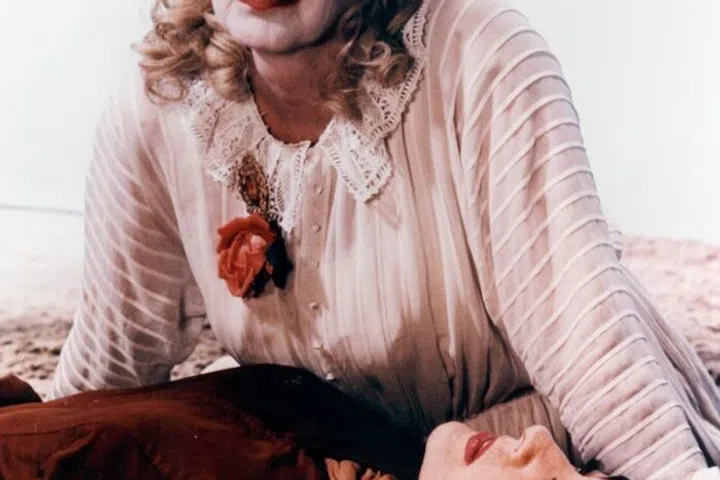
Bette Davis in Whatever Happened to Baby Jane? (1962)
Photo: Getty Images
The babydoll has returned often enough throughout fashion history to suggest it never truly disappears. It first rose to prominence during the 1950s and 1960s, made alluring by Brigitte Bardot when its loose, youthful shape represented a break from the heavily structured ideals of earlier decades. While its initial appeal was playful and French, critics felt it blurred conventional markers of maturity.
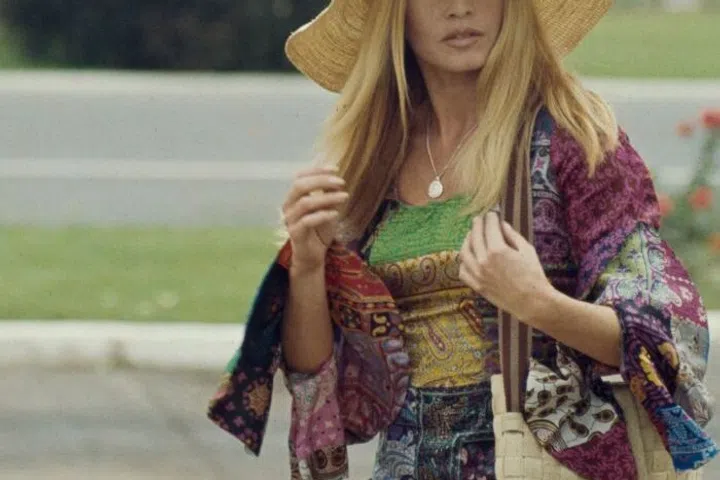
Brigitte Bardot
Photo: Getty Images
In the 1990s, the silhouette returned in an entirely different guise. Courtney Love transformed the babydoll dress into the defining symbol of her “kinderwhore” aesthetic, pairing delicate slips and doll dresses with smeared lipstick, tiaras and torn tights, and an attitude of deliberate provocation. The look challenged traditional expectations of femininity by refusing to fit neatly into categories of innocence or seduction.
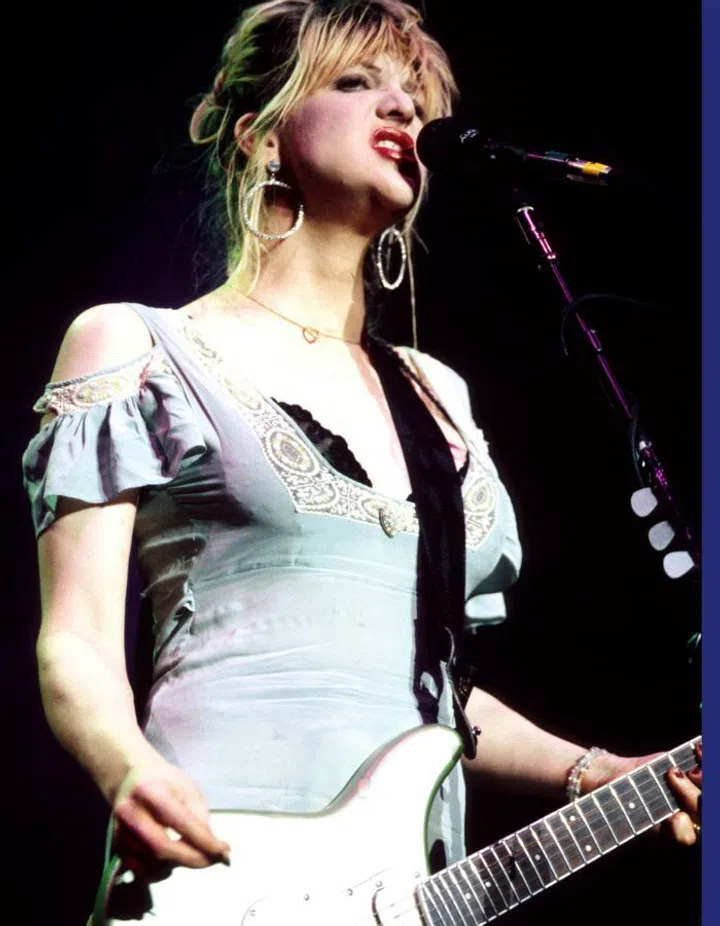
Courtney Love in the 90s
Photo: Getty Images
Tumblr’s “coquette” movement in the 2010s brought another revival, with ribbons, lace collars and vintage-inspired dresses becoming hallmarks of a highly stylised, romantic femininity. Balletcore and coquettecore have since pushed many of those same codes further into the mainstream.
For Eileen Tan, 33, creative director and co-founder of Vintagewknd, dressing this way is about retaining a sense of youthful freedom. “I will always take looking young as a compliment,” she says. “I believe in having a youthful energy—to me that means the freedom to express yourself.”
She loves bows and babydolls, but questions why women are expected to outgrow being cute. “I think as we grow older, it becomes less acceptable to be ‘cute’, which I think is a tragedy.”
She also points out that revealing clothes can attract just as much, if not more, judgement. Perhaps the issue is less about what women wear than the assumptions we attach to how they should look. Rodrigo has become the most visible expression of that shift—less the originator of the aesthetic than its latest cultural lightning rod, embodying a broader appetite for femininity that is deliberately sweet, decorative and unapologetically pretty.
And that is where things become complicated.
For decades, women were encouraged to distance themselves from traditionally feminine aesthetics in order to be taken seriously. Tailoring became synonymous with ambition; minimalism became synonymous with intelligence. Fashion’s most respected genres of dress often borrowed visual codes historically associated with masculinity. Overt femininity, meanwhile, remained burdened with assumptions of frivolity or weakness.
“Cute” clothes are trivialised in ways that other aesthetics are not. A sharply cut trouser suit is rarely asked to justify its cultural value. A dress adorned with bows almost always is.
Yet perhaps the distinction between femininity and sexuality is more complicated than that.
“I think they’re two sides of the same coin,” says Valerie Alyson Lim, 25, a creative professional and content creator who has always gravitated towards ribbons, lace and flowing silhouettes. “You don’t have to be feminine to be sexy the same way you don’t have to be sexy to be feminine. There are many ways to feel confident in our own skin.”
You don’t have to be feminine to be sexy, the same way you don’t have to be sexy to be feminine.
Valerie Alyson Lim, creative professional and content creator
For Lim, embracing femininity can itself be a form of confidence. “If embracing our femininity allows ourselves to feel comfortable in our own skin, then I think that’s pretty ‘sexy’ to me.”
She has also noticed a growing disdain towards hyper-feminine dressing, particularly the tendency to describe it as “childlike”.
“The main criticism of hyper-feminine being alluded to as ‘childlike dressing’ is, in itself, bizarre to me,” she says. “Why the formless, shapeless silhouette of a babydoll dress has been engaged in the same manner of discourse surrounding bare skin and skin-tight apparels should be ringing more alarm bells itself, rather than being placed as the central point of contention.”
Her observation cuts to the heart of the debate. If a woman can wear a body-conscious dress or reveal her body without the clothes themselves necessarily being interpreted as a commentary on her maturity, why does a loose-fitting babydoll carry such loaded associations?
Perhaps the discomfort comes from the fact that hyper-feminine dressing does not easily fit the language of empowerment we have become accustomed to. It does not necessarily signal authority, independence or sexual confidence. Instead, it embraces softness, ornamentation, nostalgia and pleasure.
And younger generations increasingly appear uninterested in apologising for that.
For many Gen Z consumers, embracing softness does not represent a retreat from empowerment but a redefinition of it. The popularity of coquettecore, balletcore and other hyper-feminine aesthetics suggests less concern with proving that femininity can be powerful; it assumes that it already is.
For many Gen Z consumers, embracing softness does not represent a retreat from empowerment but a redefinition of it.
This shift is also playing out on the Fall/Winter 2026 runways, where designers are giving girlish dressing a more grown-up twist. Miu Miu pairs a crinkled white babydoll with a furry bag, rugged lace-up shoes and a sculptural trapper hat, giving the sweet silhouette a tougher edge. At Coach, prim lace-trimmed dresses and oversized collars are styled with distressed details and sporty sneakers, while Simone Rocha offsets pretty florals and ruffles with oversized shearling and chunky embellished loafers. Chloé embraces romantic volume and Victorian flourishes, and Cecilie Bahnsen brings her signature sculptural femininity to voluminous, intricately crafted silhouettes.
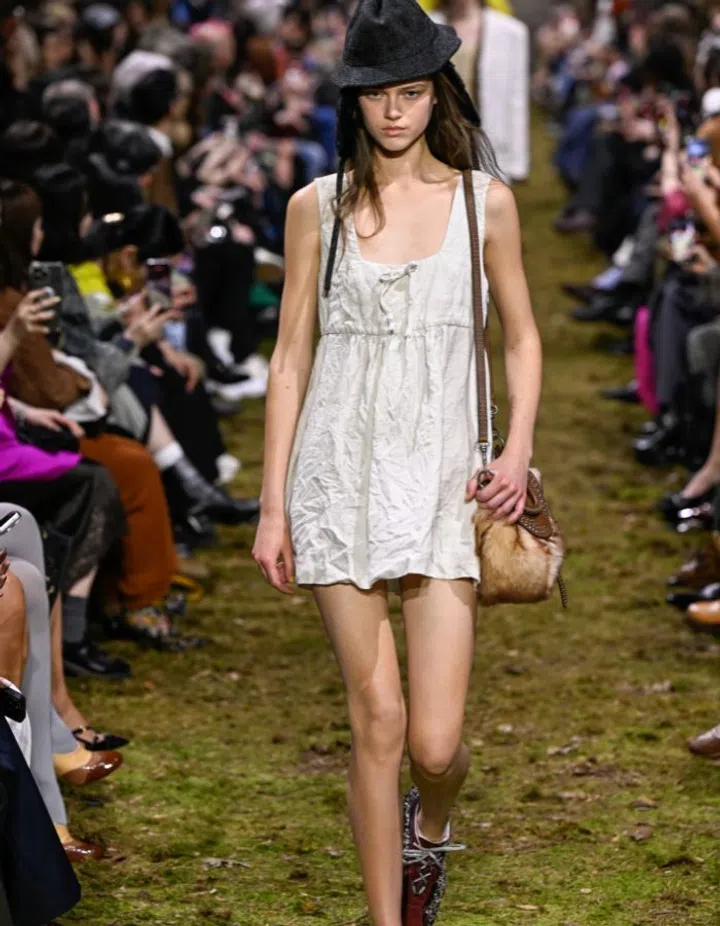
Miu Miu Fall/Winter 2026
Photo: Getty Images
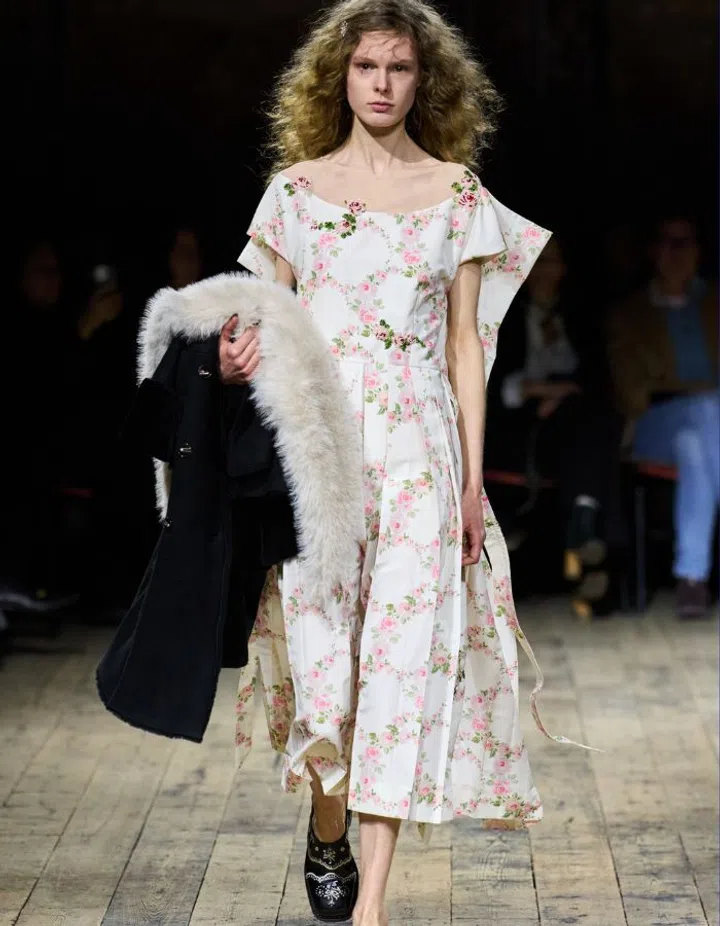
Simone Rocha Fall/Winter 2026
Photo: Getty Images
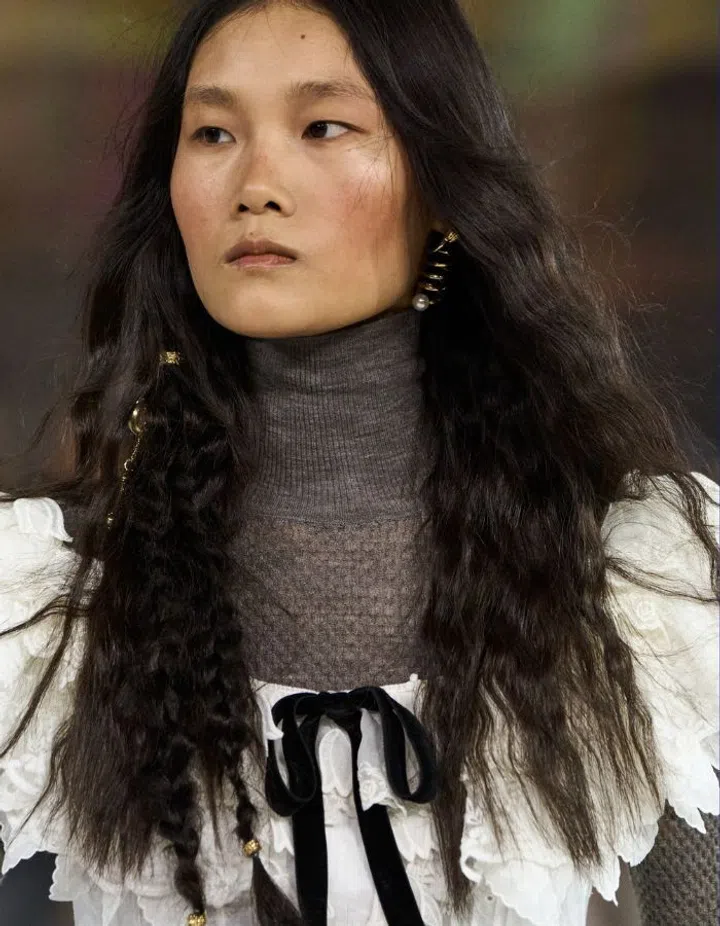
Chloe Fall/Winter 2026
Photo: Getty Images
This is perhaps why the current iteration feels different from the coquette aesthetic of a decade ago. Today’s femininity is increasingly about contradiction: soft but tough, romantic but knowing, pretty but not passive.
The babydoll has always existed in that tension. Brigitte Bardot made it flirtatious. Courtney Love made it confrontational. The coquette revival made it hyper-romantic. Olivia Rodrigo has now made it part of a new pop-cultural conversation about what it means to look feminine without necessarily wanting to be perceived as innocent.
The recurring scrutiny surrounding the babydoll therefore says less about the dress itself than it does about our expectations of women. We have become increasingly comfortable with women dressing powerfully—or dressing overtly sexually. But sweetness remains strangely suspect.
Perhaps because femininity has spent so long being treated as something women must either transcend or weaponise, simply enjoying it can feel surprisingly radical.
Perhaps because femininity has spent so long being treated as something women must either transcend or weaponise, simply enjoying it can feel surprisingly radical.
Today, perhaps the most interesting statement is not dressing powerfully or dressing provocatively. It is dressing femininely, trailing clouds of babydoll, bows, florals, lace and tulle—and refusing to apologise for any of it.
Because maybe a woman does not have to look powerful to be powerful.
Maybe she can simply look pretty.